
Table of Contents
- How to Become a Cosmetic or Plastic Surgery Nurse in Australia – Step-by-Step Career Guide
- What Is a Cosmetic or Plastic Surgery Nurse?
- Essential Qualities and Job Requirements
- Day-to-Day Responsibilities of a Cosmetic Nurse
- Benefits of a Career in Cosmetic Nursing
- Career Growth Opportunities
- Taking Action and Implementing
- Learning Academy for Plastic Surgery Staff
How to Become a Cosmetic or Plastic Surgery Nurse in Australia – Step-by-Step Career Guide
A career in cosmetic or plastic surgery nursing is one of the most rewarding and dynamic paths in modern healthcare. As the demand for aesthetic treatments continues to rise, more nurses are expanding their skill sets to include injectables, laser therapy, and non-surgical body contouring. For those with a passion for patient care and beauty, cosmetic nursing offers a stable, flexible, and fulfilling career.
This guide outlines the essential steps to becoming a cosmetic nurse in Australia – from education and registration to specialised training and employment opportunities.
What Is a Cosmetic or Plastic Surgery Nurse?
A cosmetic nurse (also known as an aesthetic nurse or plastic surgeon’s nurse) works under the supervision of a qualified Plastic Surgeon, Dermatologist, or Cosmetic Doctor. Their role focuses on providing non-surgical cosmetic treatments and assisting with pre- and post-operative patient care.
Cosmetic nurses play a vital part in helping patients look and feel their best through evidence-based, medically supervised treatments that enhance natural beauty and restore confidence.
Essential Qualities and Job Requirements
Becoming an aesthetic nurse requires more than just an interest in beauty and skincare. It’s a medical role that demands precision, empathy, and ongoing education. To thrive in this field, you’ll need:
- A strong foundation in nursing and human anatomy
- Excellent communication and interpersonal skills
- The ability to work collaboratively with doctors and medical teams
- A willingness to keep learning and upskilling
- The confidence to handle complications and manage patient safety
- Attention to detail and a steady hand
- Good stamina and the ability to stand for long periods
Personality traits such as patience, compassion, professionalism, and an eye for aesthetics are also valuable assets in this industry.
Day-to-Day Responsibilities of a Cosmetic Nurse
Depending on the setting and your level of experience, your daily duties may include:
- Conducting patient consultations and developing treatment plans
- Performing non-surgical procedures, such as:
- Anti-wrinkle injections and dermal fillers
- Skin boosters and collagen-stimulating treatments
- Chemical peels, microneedling, and laser therapy
- Non-invasive body contouring
- Providing pre- and post-operative care for surgical patients
- Assisting surgeons during cosmetic operations
- Preparing, sterilising, and maintaining equipment and treatment areas
- Documenting treatments and monitoring patient progress
Cosmetic nurses may work in private practices, plastic surgery clinics, dermatology centres, or medical spas. Many also work on a contractual or freelance basis once experienced.
Benefits of a Career in Cosmetic Nursing
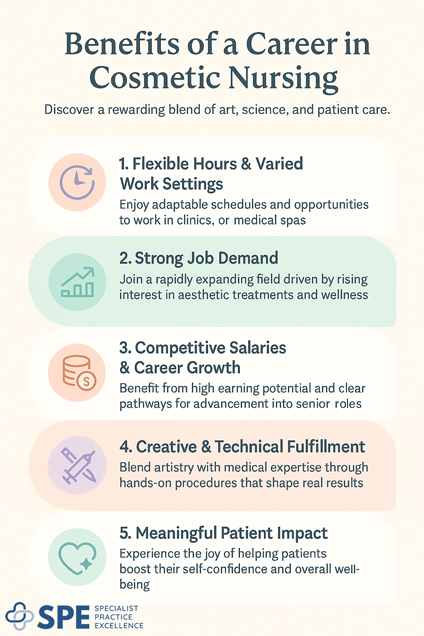
Choosing to specialise in cosmetic or aesthetic nursing comes with many professional and personal rewards:
- Flexible hours and diverse work environments
- A growing industry with strong job demand
- Attractive salaries and opportunities for advancement
- Creative and technical fulfilment from hands-on work
- The satisfaction of helping patients improve their confidence and wellbeing
Step-by-Step Guide to Becoming a Cosmetic Nurse in Australia
If you’re ready to begin your career journey, here are the key steps to becoming a qualified cosmetic nurse in Australia.
Step 1: Complete a Bachelor of Nursing
To become a Registered Nurse (RN), you must first complete a Bachelor of Nursing through an accredited university or tertiary institution. This degree typically takes 3 to 3.5 years of full-time study and provides a solid foundation in clinical care, anatomy, and patient management.
Step 2: Register with AHPRA
Once you have completed your degree, you’ll need to register with the Australian Health Practitioner Regulation Agency (AHPRA). AHPRA ensures all healthcare professionals meet national standards of safety and competence.
Step 3: Gain General Nursing Experience
Before specialising, it’s important to develop a strong base of clinical experience. Most employers prefer nurses with at least two years of general nursing practice. During this time, you can build your confidence in patient care, infection control, and clinical decision-making.
Many aspiring cosmetic nurses seek work experience or shadowing opportunities in plastic surgery clinics, dermatology practices, or medical spas to gain exposure to the aesthetic environment.
Step 4: Complete a Graduate Diploma in Cosmetic Nursing
The next step is to complete a Graduate Diploma in Cosmetic Nursing and Injectables, offered by approved Australian institutions. This qualification usually takes around 10 months full-time (or up to 20 months part-time).
During your studies, you’ll gain practical and theoretical knowledge in:
- Facial anatomy and ageing
- Injectable techniques (anti-wrinkle and dermal fillers)
- Chemical peels, skin needling, and laser procedures
- Light-based and non-invasive body treatments
- Patient assessment and treatment planning
- Clinical safety and complication management
The diploma also includes a mandatory 76-hour clinical placement, where you’ll gain supervised, hands-on experience in a real clinical environment.
Graduates are eligible to join the Australasian College of Aesthetic Medicine (ACAM) as Cosmetic Nursing members – a respected credential that can help advance your career.
Step 5: Commit to Continuing Professional Development
Cosmetic nursing is a fast-evolving field. To stay current and maintain your registration, you must commit to ongoing professional development through workshops, conferences, and refresher training.
Regularly updating your skills ensures you remain confident, compliant, and competent with new technologies, techniques, and safety standards.
Step 6: Find Employment in the Cosmetic Industry
Once qualified, you can begin seeking work in plastic surgery practices, cosmetic clinics, or dermatology centres. Many nurses start as clinical assistants or injectable trainees under the supervision of experienced cosmetic physicians.
Networking through your training program, professional associations, or job platforms like Seek can help you connect with reputable employers. Demonstrating professionalism, a strong work ethic, and a passion for aesthetics will set you apart from other applicants.
Career Growth Opportunities
After gaining experience as a cosmetic nurse, you may wish to:
- Train in advanced injectable techniques
- Transition into clinical education or training roles
- Work as a practice manager in a cosmetic clinic
- Collaborate with a plastic surgeon in an integrated aesthetic practice
- Pursue postgraduate study to become a Nurse Practitioner specialising in aesthetics
With the right blend of clinical skill and artistry, your career possibilities in the cosmetic and plastic surgery field are broad and rewarding.
FAQs about becoming a Plastic Surgery Nurse
FAQs about Plastic Surgery Nurse Education & Qualifications
Q: Can you become a cosmetic nurse without a university degree?
No, you must complete a Bachelor of Nursing to become a Registered Nurse before specialising in aesthetics.
Q: Is a Graduate Diploma in Cosmetic Nursing mandatory in Australia?
It’s not legally required, but most employers expect it as it provides hands-on injectable and dermal training.
Q: Can enrolled nurses work in cosmetic clinics?
Yes, but they have limited scope and must always work under a registered medical professional’s supervision.
Q: Are online cosmetic nursing courses recognised by AHPRA?
Only if offered by accredited Australian institutions with clinical placement components.
Q: Can I study cosmetic nursing part-time while working as a hospital nurse?
Yes, most postgraduate programs offer flexible or part-time study options for working nurses.
FAQs about Plastic Surgery Nurse Experience & Training
Q: How much experience do I need before working in a cosmetic clinic?
At least two years of general nursing experience is recommended to build strong clinical and patient-care skills.
Q: What kind of clinical placement do cosmetic nursing students complete?
Typically 70–80 hours in cosmetic or dermatology clinics under qualified nurse injectors or plastic surgeons.
Q: Can I shadow a plastic surgeon to gain experience?
Yes, job shadowing is an excellent way to observe procedures and understand patient journeys in aesthetics.
Q: Do cosmetic nurses need CPR or first aid certification?
Yes, and it must be kept current as part of your AHPRA continuing professional development (CPD).
Q: Are laser and skin therapy courses included in cosmetic nursing training?
Many programs include laser safety and skin rejuvenation units, but advanced certification may require extra study.
FAQs about Plastic Surgery Nurse Licensing & Regulation
Q: Do cosmetic nurses need to register separately for injectables?
No separate license is required, but you must have appropriate training and a prescribing doctor’s oversight.
Q: Can a cosmetic nurse prescribe dermal fillers or anti-wrinkle injections?
No, only doctors and nurse practitioners can prescribe; cosmetic nurses must work under their written orders.
Q: How often do I need to renew my AHPRA registration?
Every year, with proof of continuing professional development hours and current insurance.
Q: Can international nurses become cosmetic nurses in Australia?
Yes, but they must have their qualifications assessed and gain AHPRA registration first.
Q: Are there any age limits for becoming a cosmetic nurse?
No, nurses of any age can train and practice as long as they meet health, education, and licensing standards.
FAQs about Plastic Surgery Nurse Career & Lifestyle
Q: Is cosmetic nursing less stressful than hospital nursing?
Generally yes, but it still requires high precision, focus, and patient management under time pressure.
Q: Do cosmetic nurses work weekends or evenings?
Many clinics offer flexible schedules, including late or weekend shifts, to suit client demand.
Q: Can cosmetic nurses own their own clinic?
Yes, if they partner with a prescribing doctor and meet all medical governance and business regulations.
Q: What’s the typical salary for a cosmetic nurse in Australia?
Salaries vary from $80,000 to $150,000+, depending on experience, location, and clinic performance.
Q: Is there a high demand for cosmetic nurses in regional Australia?
Yes, regional areas often lack trained injectors, offering great opportunities for skilled cosmetic nurses.
Taking Action and Implementing
Cosmetic nursing is a career that blends science, artistry, and patient care. If you’re motivated by helping people feel more confident and have a keen eye for detail, this field can offer long-term satisfaction and professional growth.
Begin by researching accredited nursing programs and postgraduate qualifications in your area, gain experience in patient care, and connect with aesthetic professionals to start building your career path today.