
Understanding The Role and Tasks of a Practice Nurse in a Private Plastic Surgery Practice
Private plastic surgery practices are complex environments where clinical precision, patient service, and emotional support all intersect. While surgeons focus on operating, practice nurses are the thread that ties the entire patient journey together. They prepare patients before surgery, monitor them during recovery, educate them about aftercare, and often provide the reassurance that builds long-term trust. Explore the daily responsibilities of a plastic surgery nurse in A Day in the Life of a Plastic Surgery Nurse.
In many ways, nurses are the “face” of a private practice. Patients frequently remember how they were cared for more vividly than the technical aspects of surgery. That’s why understanding — and valuing — the full scope of nursing responsibilities is essential for safe, high-quality, five-star care.
Core Responsibilities of Practice Nurses
1. Pre-operative Preparation
Conduct thorough nursing assessments and review medical histories.
Ensure all pre-operative tests and clearances are complete.
Provide education on fasting, medications, compression garments, and recovery expectations.
Support patient anxiety management through reassurance and clear communication.
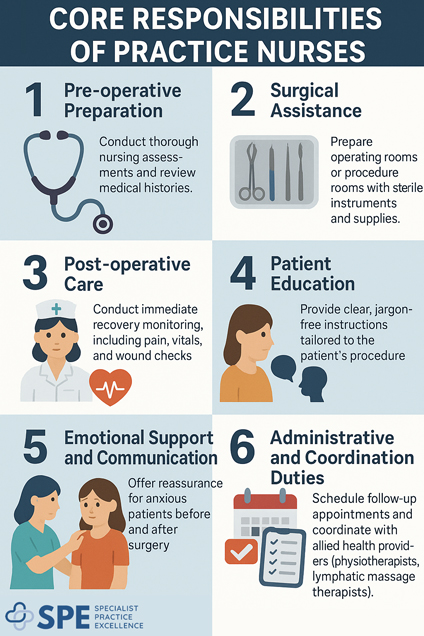
2. Surgical Assistance
Prepare operating rooms or procedure rooms with sterile instruments and supplies.
Assist surgeons during minor procedures performed in-office (e.g., mole excision, injectable treatments).
Maintain strict infection control and aseptic protocols.
Monitor patient vitals during in-practice procedures.
3. Post-operative Care
Conduct immediate recovery monitoring, including pain, vitals, and wound checks.
Change dressings, monitor drains, and ensure compression garments are fitted correctly.
Provide pain management support and reinforce medication adherence.
Educate patients on wound care, scar management, and activity restrictions.
Escalate any complications (infection, hematoma, delayed healing) to the surgeon promptly.
4. Patient Education
Provide clear, jargon-free instructions tailored to the patient’s procedure.
Teach wound cleaning, drain management, and signs of complications.
Guide patients in scar massage, silicone therapy, and sun protection.
Support holistic recovery — covering hydration, nutrition, and rest.
5. Emotional Support and Communication
Offer reassurance for anxious patients before and after surgery.
Act as the bridge between the patient and the surgeon.
Provide empathetic listening and validation of concerns.
Normalize recovery timelines and manage expectations realistically.
6. Administrative and Coordination Duties
Schedule follow-up appointments and coordinate with allied health providers (physiotherapists, lymphatic massage therapists).
Maintain accurate documentation in electronic health records.
Handle patient phone calls and queries regarding dressings, pain, or recovery milestones.
Monitor stock of wound care products, garments, and clinical supplies.
Specialized Skills of Plastic Surgery Nurses
Aesthetic knowledge – understanding how surgical decisions affect cosmetic outcomes.
Photography protocols – capturing consistent before-and-after images.
Scar management – advanced knowledge of dressings, silicone, and massage.
Psychological awareness – recognizing BDD, body image concerns and anxiety.
Service excellence – delivering care that feels “five-star” in private practice.
Mapping the Patient Journey: Where Nurses Make the Difference
A patient’s surgical journey is full of touchpoints where the nurse plays a vital role. By mapping these, practices can design a seamless experience.
- Initial Consultation Phase
- Record medical history and medications.
- Flag risk factors for wound healing (e.g., smoking, diabetes, supplements).
- Begin rapport-building — reassure and normalize.
- Pre-Operative Preparation
- Provide detailed fasting and medication instructions.
- Arrange pre-op investigations (bloods, ECG, imaging if required).
- Fit and explain compression garments.
- Educate about expected pain, bruising, drains, and scars.
- Day of Surgery
- Welcome the patient warmly, reducing anxiety.
- Confirm consent, allergies, and checklists.
- Prepare the theatre or minor procedure room.
- Assist the surgeon with local anesthesia or in-room procedures.
- Immediate Post-Operative Phase
- Monitor vital signs and pain.
- Apply dressings and fit garments.
- Educate patients and carers on drain care, wound care, and red flags.
- Recovery Weeks 1–6
- Change dressings, remove sutures.
- Guide scar management (silicone, massage, sun protection).
- Monitor drains and swelling.
- Provide reassurance when patients worry about bruising or asymmetry.
- Long-Term Follow-Up (3–12 months)
- Support ongoing scar care.
- Photograph results consistently for medico-legal and patient reassurance.
- Check on emotional well-being and body image.
- Celebrate milestones to reinforce patient satisfaction.
Core Clinical Responsibilities
- Pre-Op Assessments: Detailed review of health status, medications, and risk factors.
- Intra-Procedure Support: Assisting with set-up and minor in-office procedures.
- Wound & Dressing Care: Regular monitoring, dressing changes, drain checks, garment fitting.
- Scar Management: Educating on silicone sheets, massage, and UV protection.
- Monitoring & Escalation: Early identification of infection, hematoma, delayed healing.
- Medication Support: Reinforcing surgeon’s prescriptions, advising on compliance, flagging interactions.
Collaboration with Surgeons
Practice nurses act as the surgeon’s partner in care. They:
- Escalate early warning signs so complications can be managed quickly.
- Ensure the surgeon is updated on wound healing progress at each follow-up.
- Handle many day-to-day questions, freeing surgeons to focus on complex decision-making.
- Provide a second set of eyes and ears, catching details that can impact outcomes.
This collaboration is crucial for safe care, medico-legal protection, and consistent patient satisfaction.
Emotional Support and Service Excellence
Borrowing from Hug Your Customers (Jack Mitchell) and Up Your Service (Ron Kaufman), nurses should see each patient interaction as an opportunity to deliver personalized, uplifting service.
- Personalization: Remember preferences (pillows, drinks, concerns).
- Connection: Ask about family, work, or hobbies to reduce anxiety.
- Anticipation: Offer water, tissues, or comfort measures before being asked.
- Follow-Up: A caring phone call 24–48 hours post-op often means more to patients than they expect.
In private practice, this kind of service makes the difference between a good experience and a five-star experience.
Documentation, Technology, and Safety
Nurses are guardians of medico-legal safety. Their quality documentation protects both patients and the practice.
- Wound Photography: Consistent angles, lighting, and scale for reliable comparison.
- Electronic Medical Records (EMR): Accurate notes on wound healing, dressing changes, and calls.
- Consent Management: Ensuring verbal/written consent is recorded for photos and procedures.
- Compliance: Adhering to AHPRA (Australia), HIPAA (USA), or local privacy laws.
Secure, consistent documentation is a hallmark of safe practice.
Leadership and Mentorship
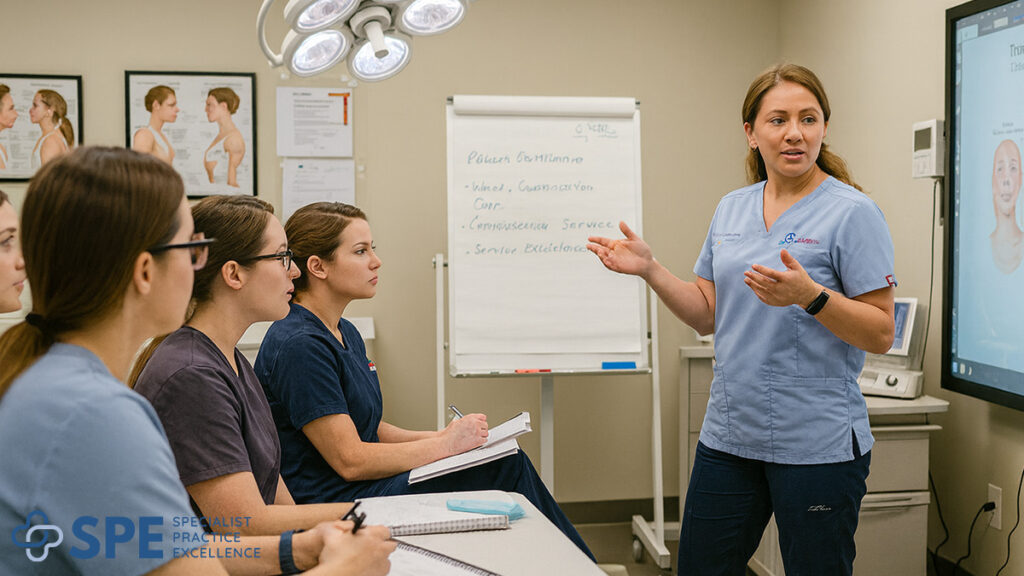
Experienced practice nurses also play leadership roles:
- Training new nurses and administrative staff in wound care, communication, and service.
- Running in-service sessions on scar management or infection control.
- Leading audits on infection rates, garment compliance, and documentation quality.
- Acting as mentors who model empathy and professionalism for junior staff.
Do’s and Don’ts for Practice Nurses
Do’s
- Do blend clinical expertise with warmth.
- Do personalize care with attention to detail.
- Do monitor and escalate concerns early.
- Do document thoroughly at every stage.
- Do follow-up after discharge to reassure patients.
- Do keep communication open with the surgical team.
- Do continue professional development to stay current.
Don’ts
- Don’t dismiss “minor” patient concerns.
- Don’t assume patients understand jargon.
- Don’t overlook emotional well-being.
- Don’t allow inconsistency in garment fitting or wound care.
- Don’t delay when complications arise.
- Don’t neglect consent and privacy protocols.
- Don’t underestimate your impact on patient loyalty.
FAQs for the Role & Tasks of a Practice Nurse
Clinical Responsibilities FAQs
Yes, they assess wounds, change dressings, and provide instructions for at-home care.
Yes, they’re trained to spot infection, fluid collections, and delayed healing — and escalate to the surgeon.
Yes, ensuring proper fit is essential to avoid folds, discomfort, or circulation issues.
Patient Support FAQs
Nurses are accessible, approachable, and often the first line of reassurance.
By explaining recovery steps clearly, validating concerns, and offering practical tips.
Absolutely — compassionate care and clear education shape how patients remember their recovery.
Education and Career FAQs
General nursing degree + surgical or recovery experience, plus wound care and aesthetics training.
Yes, through wound management, cosmetic nursing, or advanced practice roles.
Yes, nurses often lead in ensuring consistency, accuracy, and medico-legal safety.
Private Practice Operations FAQs
Yes, especially follow-ups and dressing change appointments.
Indirectly — through patient loyalty, referrals, and quality outcomes that sustain practice growth.
By blending safety, empathy, and small personal touches that make care feel five-star.
Medical References for Scope of a Practice Nurse
Australasian College of Cosmetic Surgery. (2015). Professional practice standards and scope of practice for aesthetic nursing practice in Australia. ACCS. https://www.accsm.org.au/pdf/FINAL_Professional_Practice_Standards_Scope_Practice_Aesthetic_Nursing_Practice_in_Australia_20150709.pdf
Takeaway: Defines domains for aesthetic nurses in Australia (injectables, lasers, assessment) and stresses scope is set by training, competency, and policy.
Australian Nursing & Midwifery Federation (Victoria Branch). (n.d.). Guidance note: Cosmetic nursing practice. ANMF Victoria. https://www.anmfvic.asn.au/~/media/files/anmf/guidancenotes-policies-positionstatements/guidancenotes/cosmetic%20nursing%20practice.pdf
Takeaway: Outlines regulatory framework for cosmetic nursing in Victoria; clarifies limits of practice and supervision requirements.
Nurse Key. (n.d.). Scope of plastic surgery nursing practice. Nurse Key. https://nursekey.com/scope-of-plastic-surgery-nursing-practice/
Takeaway: Defines plastic surgery nursing across pre-, intra-, and post-operative care, with emphasis on wound management, patient education, and team collaboration.
O’Keefe, M., Ward, C., Griffiths, C., & Hoitink, L. (n.d.). Clinical scope of practice for nurses. Aesthetic Medical Practitioner. https://aestheticmedicalpractitioner.com.au/features/cosmetic-practice/clinical-scope-practice-nurses/
Takeaway: Describes scope for ENs, RNs, and NPs in aesthetic practice; details what procedures/tasks can be performed under regulation and supervision.
Van Wicklin, S. A. (2021). Determining scope of practice. Plastic Surgical Nursing, 41(1), 36–38. https://learning.lww.com/ovidfiles/00006527-202101000-00011.pdf
Takeaway: Explains how to determine nursing scope using licensure, organizational policy, community standards, and competence; introduces ISPAN decision tools.
Would you like me to now insert these references at the end of your “Role and Tasks of a Practice Nurse in a Private Plastic Surgery Practice” article so the blog is ready for publication with academic backing?
Useful Resources for Plastic Surgery Practice Nurses
- International Society of Plastic and Aesthetic Nurses (ISPAN)
- American Society of Plastic Surgical Nurses (ASPSN) – training, webinars, and resources.
- Australian College of Nursing – Plastic & Reconstructive Nursing short courses.
- Wounds Australia Standards for Wound Prevention and Management (4th edition, 2023).
- Royal College of Nursing (UK) – Aesthetic Nursing Forum.
- Books on Service Excellence: Hug Your Customers (Jack Mitchell), Up Your Service (Ron Kaufman).
Taking Action and Implementing
The role of a practice nurse in private plastic surgery is multi-dimensional. They are clinicians, educators, advocates, mentors, and service leaders. Their ability to combine medical safety with empathy and personalization shapes not just outcomes but the reputation of the entire practice.
By mapping the patient journey, working hand-in-hand with surgeons, embracing technology, and setting a gold standard in service, nurses elevate care from functional to exceptional. And in a field where patients invest deeply — financially and emotionally — that distinction is what defines a five-star plastic surgery practice.