

Table of Contents
- How to Manage Nausea and Vomiting after Surgery – Helping Patients Recover Comfortably
- Why Nausea and Vomiting Matter in Cosmetic Surgery Recovery
- Causes of Post-Operative Nausea and Vomiting
- The Nurse’s Role in PONV Prevention and Management
- Non-Pharmacological Strategies
- Red Flags – When Nausea Indicates Something More Serious
- Supporting Patient Experience
- Do’s and Don’ts of Managing Nausea and Vomiting
- Taking Action and Implementing
- Further Reading
How to Manage Nausea and Vomiting after Surgery – Helping Patients Recover Comfortably
Post-operative nausea and vomiting (PONV) are among the most common and distressing complications for patients recovering from cosmetic and reconstructive surgery. Even when surgical results are technically perfect, unmanaged nausea can overshadow the patient’s experience, prolong recovery, and in some cases compromise safety. For nurses working in private plastic surgery practices, managing nausea and vomiting is both a clinical responsibility and a patient-experience priority.
This article explores the causes of PONV, strategies for prevention and management, and the critical role nurses play in helping patients recover comfortably.
Why Nausea and Vomiting Matter in Cosmetic Surgery Recovery
Unlike general surgical patients, cosmetic surgery patients often have high expectations for comfort and smooth recovery. Even “minor” discomforts like nausea can cause anxiety, regret, or dissatisfaction. More importantly, vomiting after plastic surgery can have serious consequences:
- Increased risk of bleeding or haematoma (particularly after facial or breast surgery).
- Wound dehiscence due to strain on incisions.
- Aspiration risk in sedated or weakened patients.
- Delayed discharge from recovery units or clinics.
- Negative patient experience, potentially overshadowing surgical success.
Nurses are on the frontline of preventing and treating PONV, making their vigilance and patient communication vital.
Causes of Post-Operative Nausea and Vomiting

Anaesthetic Factors
- Volatile anaesthetic gases
- Use of opioids
- Length of anaesthesia
Patient-Related Factors
- Female gender
- Non-smoker status
- History of motion sickness or prior PONV
- Younger age
Surgical Factors
- Type of surgery (abdominoplasty, breast, and facial procedures carry higher risk)
- Length and complexity of surgery
- Use of drains or tight garments, which may cause discomfort or pressure
The Nurse’s Role in PONV Prevention and Management
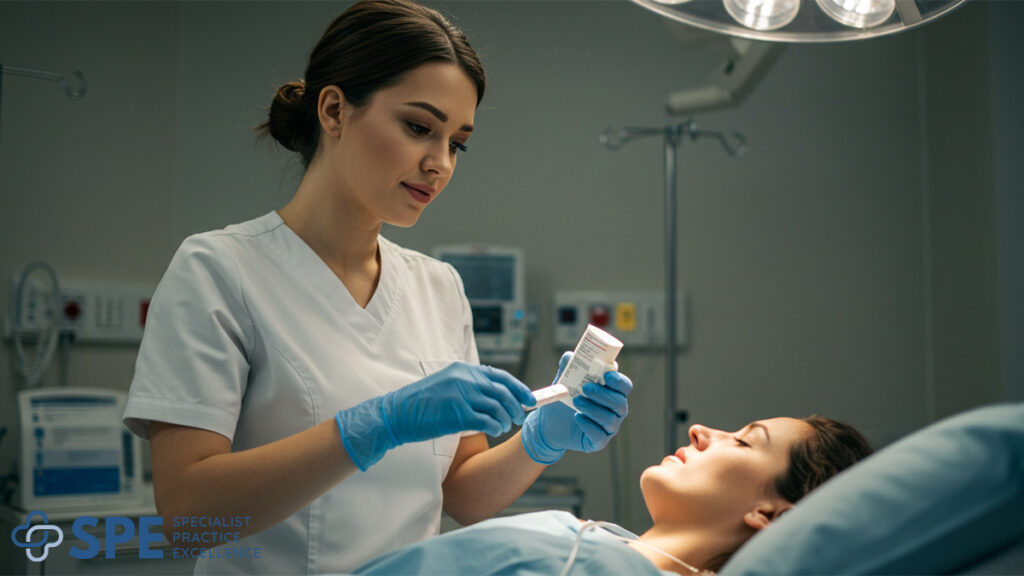
Nurses in private practice must combine proactive assessment with timely intervention. Responsibilities include:
- Identifying high-risk patients pre-operatively.
- Administering prescribed antiemetics.
- Observing early signs of nausea such as pallor, sweating, or restlessness.
- Supporting hydration and gradual reintroduction of oral intake.
- Reassuring patients and normalising the experience.
- Escalating when nausea persists or worsens.
Pharmacological Management of PONV
Common Antiemetic Classes
- 5-HT3 antagonists (ondansetron, granisetron) – highly effective, commonly used.
- Dopamine antagonists (metoclopramide, droperidol) – useful but with side effect considerations.
- Antihistamines (cyclizine, dimenhydrinate) – especially for motion sickness history.
- Steroids (dexamethasone) – often given intraoperatively for prophylaxis.
Nurse Considerations
- Administer prophylactic antiemetics for high-risk patients.
- Monitor for side effects such as sedation, headache, or extrapyramidal symptoms.
- Document timing, route, and patient response.
- Escalate if nausea does not respond to first-line agents.
Non-Pharmacological Strategies
Nurses can support comfort with simple but effective interventions:
- Positioning – elevate head of bed to reduce aspiration risk.
- Fresh air and ventilation – reducing odours and heat.
- Acupressure – wristbands or pressure at P6 (Neiguan point) shown to reduce nausea in some studies.
- Ginger tea or lozenges – safe, natural options if approved by the surgeon.
- Calm environment – minimise noise, light, and stimulation when nausea is severe.
- Slow reintroduction of fluids – starting with ice chips, then clear fluids.
Red Flags – When Nausea Indicates Something More Serious
Not all nausea is routine. Nurses should escalate if patients experience:
- Persistent vomiting preventing hydration.
- Severe abdominal pain or distension.
- Blood in vomit.
- Dizziness, hypotension, or confusion with nausea.
- Respiratory distress suggesting aspiration.
These symptoms may signal ileus, bleeding, electrolyte imbalance, or other complications requiring urgent medical review.
Supporting Patient Experience
How nurses respond to nausea often shapes a patient’s overall perception of care. Patients frequently recall the kindness and reassurance of the nurse who “stayed with me until I felt better.” Key strategies include:
- Acknowledging the discomfort without minimising it.
- Offering comfort measures promptly.
- Explaining that nausea is common and manageable.
- Involving family in reassurance if appropriate.
Do’s and Don’ts of Managing Nausea and Vomiting
Do’s
- Do identify high-risk patients before surgery.
- Do administer prophylactic antiemetics when prescribed.
- Do encourage slow, gradual reintroduction of fluids.
- Do monitor hydration status and escalate if vomiting persists.
- Do reassure patients with calm, confident communication.
- Do document interventions and responses clearly.
- Do provide practical comfort measures alongside medication.
Don’ts
- Don’t dismiss nausea as “just normal” without assessment.
- Don’t give fluids too quickly after vomiting.
- Don’t delay escalation if nausea is persistent or worsening.
- Don’t forget to check for drug interactions or allergies.
- Don’t overload patients with sensory stimulation when nauseated.
- Don’t assume antiemetics alone are always enough — combine strategies.
- Don’t underestimate the psychological distress nausea can cause.
FAQs on Managing Nausea and Vomiting
Clinical Observation FAQs
Q: What are the earliest signs a patient is about to vomit?
Sweating, pallor, swallowing repeatedly, and restlessness often precede vomiting.
Q: Why do some patients vomit even after prophylactic antiemetics?
Multiple factors may override medication — long surgeries, opioid use, or high patient susceptibility.
Q: Can dehydration worsen nausea?
Yes. Dehydration reduces gut motility and increases dizziness, worsening nausea.
Pharmacological FAQs
Q: What’s the best time to give ondansetron?
It is most effective when given at the end of surgery, before the patient regains consciousness.
Q: Can patients be given two antiemetics from different classes?
Yes. Combination therapy is often more effective than a single drug in high-risk patients.
Q: Why does dexamethasone help with PONV?
It reduces inflammation and has central antiemetic effects, though mechanism is not fully understood.
Non-Pharmacological FAQs
Q: Do acupressure wristbands really work?
Evidence suggests they can help some patients, especially when combined with antiemetics.
Q: Is taking ginger safe after plastic surgery?
Generally yes, in small amounts such as teas or lozenges, but check with the surgeon for each patient.
Q: Why does fresh air help with nausea?
Cool, well-ventilated environments reduce sensory triggers and can ease discomfort.
Patient Experience FAQs
Q: Why do some patients panic when nausea starts?
Fear of vomiting, embarrassment, or memories of past PONV can trigger panic. Calm reassurance helps.
Q: What’s the best way to educate patients about nausea before discharge?
Explain that mild nausea is common, encourage hydration, and provide clear instructions on when to call if vomiting persists.
Q: How can nurses reduce anxiety in patients prone to PONV?
Proactively acknowledge risk, reassure that medications are available, and involve them in choosing comfort measures.
Taking Action and Implementing
Managing nausea and vomiting after cosmetic surgery requires a balanced approach that blends clinical skill, medication, and human compassion. For nurses in private practice, the challenge is not only preventing aspiration or dehydration but also ensuring patients feel supported during one of the most uncomfortable parts of recovery.
By recognising risk factors, combining pharmacological and non-drug strategies, and responding quickly to red flags, nurses can transform an unpleasant complication into a manageable experience. In Specialist Practice Excellence, comfort is as important as safety — and effective PONV management is a hallmark of outstanding nursing care.