
A Nurse’s Guide to Recognising and Responding to Post-Operative Infections
In plastic and cosmetic surgery recovery, few complications are as feared as infection. Even a small infection can compromise cosmetic outcomes, delay healing, and in some cases, pose a serious risk to patient safety. For nurses working in private practices, recognising infections early and responding effectively is one of the most important responsibilities.
Patients often leave private facilities sooner than hospitalised patients, which means nurses must be vigilant during follow-up care, education, and telephone triage. Infection prevention is always the goal — but when it does occur, timely recognition and escalation can make the difference between a minor setback and a serious complication.
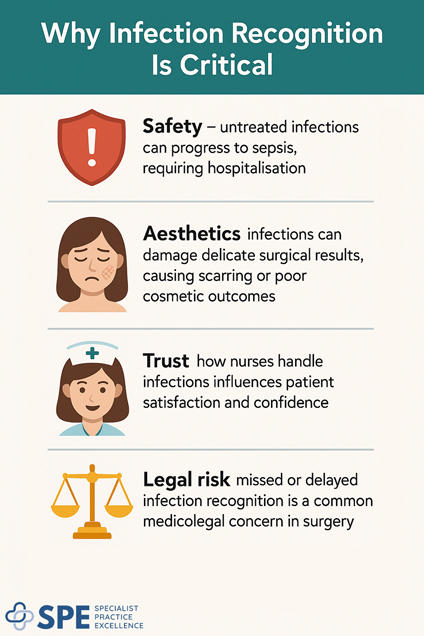 Why Infection Recognition Is Critical
- Safety – untreated infections can progress to sepsis, requiring hospitalisation.
- Aesthetics – infections can damage delicate surgical results, causing scarring or poor cosmetic outcomes.
- Trust – how nurses handle infections influences patient satisfaction and confidence.
- Legal risk – missed or delayed infection recognition is a common medicolegal concern in surgery.
Common Causes of Post-Operative Infections
- Breaks in aseptic technique during dressing or drain care
- Haematoma or seroma formation, which create a medium for bacteria
- Poor patient compliance with wound care instructions
- Underlying health issues (diabetes, obesity, smoking, immune suppression)
- Contaminated environments (improper garment or dressing hygiene)
Types of Post-Operative Infections in Plastic Surgery
- Superficial incisional infection – redness, warmth, swelling, and discharge at the wound site.
- Deep incisional infection – pain, swelling, and systemic symptoms; may involve fascia or muscle.
- Organ/space infection – rare but serious; e.g., implant infection, abscess formation.
- Systemic infection/sepsis – high fever, tachycardia, confusion, and risk of organ failure.
Nurse’s Role in Infection Recognition
Nurses are often the first to notice subtle changes. Key responsibilities include:
- Conducting thorough wound assessments at every check
- Recording objective findings (size, colour, drainage type)
- Listening carefully to patient concerns — “it feels different” can be an early warning
- Comparing wounds across visits for patterns or deterioration
- Recognising when normal healing signs (mild redness, swelling) cross into infection territory
Red Flags – When to Escalate Immediately
- Spreading redness around the wound
- Foul-smelling or purulent drainage
- Sudden increase in pain, especially one-sided or disproportionate
- Fever, chills, or flu-like symptoms
- Swelling with warmth and tenderness
- Opening of the wound edges with discharge
- Systemic signs: tachycardia, confusion, low blood pressure
Responding to Suspected Infections


Immediate Nursing Actions
- Escalate findings to the surgeon promptly
- Document observations with clear descriptions (e.g., “2cm erythema spreading laterally”)
- Collect wound swabs if authorised by practice protocols
- Reassure patient while explaining next steps
Communication Tips
- Stay calm and professional — avoid alarming language
- Use factual explanations (“This redness is more than we’d expect, so we’d like the surgeon to review it”)
- Provide clear instructions for patients if antibiotics or hospitalisation are needed
Preventive Strategies in Daily Practice
- Maintain strict aseptic technique for all wound and drain care
- Use gloves, masks, and sterile dressings as directed
- Educate patients about hand hygiene and garment care
- Reinforce the importance of attending follow-up visits
- Provide written “when to call” instructions at discharge
Do’s and Don’ts of Infection Recognition and Response
Do’s
- Do check wounds consistently at every interaction.
- Do document changes with objective detail.
- Do escalate red flags promptly to the surgeon.
- Do educate patients about normal vs abnormal healing signs.
- Do encourage good hydration and nutrition for healing.
- Do practice strict infection control at all times.
- Do reassure patients while maintaining transparency.
Don’ts
- Don’t dismiss patient concerns without assessment.
- Don’t rely on memory — document everything clearly.
- Don’t minimise early signs of infection.
- Don’t break aseptic technique during dressing changes.
- Don’t delay escalation for “just one more day.”
- Don’t assume all redness or swelling is harmless.
- Don’t forget to check garments for contributing pressure or moisture.
FAQs on Recognising and Responding to Post-Operative Infections
Clinical Signs FAQs
Q: How do I tell the difference between normal redness and infection?
Normal redness is localised and improves within days. Infection redness spreads, is warm to touch, and worsens over time.
Q: Is a mild fever always a sign of infection?
Not always. Low-grade fevers can result from the body’s healing response. Persistent or spiking fevers need escalation.
Q: Can clear drainage mean infection?
Not usually. Purulent, cloudy, or foul-smelling drainage is more concerning than clear fluid.
Dressing and Drain FAQs
Q: How do drains influence infection risk?
They provide an entry point for bacteria. Proper securement and aseptic management reduce this risk.
Q: Can saturated dressings cause infection?
Yes. Moisture promotes bacterial growth. Dressings should be changed if wet or contaminated.
Q: What is the safest way to check drains for infection?
Assess colour, odour, and consistency of drainage at regular intervals, and inspect insertion sites.
Patient Education FAQs
Q: What should patients watch for at home?
Redness spreading around incisions, foul odour, pus, fever, or sudden swelling are key red flags.
Q: How can I explain infection risk without alarming patients?
Frame it positively: “Most patients heal well, but here’s what to call us for if it happens, so we can act quickly.”
Q: Should patients clean wounds at home?
Only as directed by the surgeon. Over-cleaning can irritate tissue and slow healing.
Escalation FAQs
Q: When should a wound swab be taken?
Only if directed by the surgeon. Nurses should never delay escalation while waiting for a swab result.
Q: Should I call the surgeon at night for suspected infection?
Yes, if red flags are present. Delaying can allow infection to worsen.
Q: When should patients be transferred to hospital?
If they have systemic signs (fever, tachycardia, hypotension) or suspected sepsis.
Comfort and Support FAQs
Q: How can I reassure patients worried about infection?
Acknowledge concerns, explain your observations, and highlight that early action prevents serious complications.
Q: Why do some patients overreact to normal bruising?
Many confuse bruising with infection. Nurses should explain normal healing signs before discharge to reduce anxiety.
Q: What’s the best way to reduce patient guilt if infection develops?
Reassure them that infections can occur despite perfect compliance and that prompt treatment will protect results.
Private Practice and Legal FAQs
Q: Is infection more common in private practice than hospitals?
Not necessarily — but private patients are often discharged sooner, so nurse follow-up and education are critical.
Q: What’s the most important legal protection for nurses in infection cases?
Detailed documentation of assessments, education given, and escalation steps.
Q: Should nurses ever prescribe antibiotics for infections?
No — antibiotics must always be prescribed by a doctor. Nurses should escalate promptly.
Taking Action and Implementing
Recognising and responding to post-operative infections is a cornerstone of safe plastic surgery nursing. For private practice nurses, vigilance, documentation, and patient education are the tools that keep patients safe. Infections are not always preventable, but early action can protect both patient health and aesthetic outcomes.
Every wound assessment, every drain check, and every phone call with a concerned patient is an opportunity to act early. By combining technical skill with clear communication and compassionate reassurance, nurses ensure that infections are managed quickly and effectively.
Infection vigilance is not just clinical responsibility — it is a standard of care that protects patients, practices, and reputations.