AI for Plastic Surgeons, Medspa Clinics & Plastic Surgery Practices
Artificial Intelligence (AI) is rapidly transforming the way plastic surgeons and their practices operate. From medical scribes that save hours of documentation time, to advanced tools for research, video creation, patient communication, and marketing, AI is no longer just a futuristic concept — it’s becoming an everyday necessity.
The right AI tools can streamline workflows, reduce burnout, improve patient education, and support better decision-making across consultations, surgery planning, and practice management. For busy surgeons balancing clinical care with the demands of running a practice, AI offers a practical way to reclaim time, cut costs, and deliver a higher standard of service.
At Specialist Practice Excellence, we’ve been exploring the most effective ways surgeons can harness AI in their professional lives. This blog highlight the best AI apps, scribes, chatbots, and large language models (LLMs) for the medical field — plus practical tips for using ChatGPT, tools for marketing, and even AI solutions designed specifically for plastic surgery patients. Whether you’re curious about one of the many AI scribes like Heidi Health, Lyrebird or Deepscribe, image analysis platforms for facial aesthetics, or productivity enhancers like Notion AI & Motion AI, this growing AI toolkit can help you build a more efficient, patient-focused, and future-ready practice.
Most Popular AI Programs Being Used in Plastic Surgery Practices
Medical Scribe Programs


Writing Email Responses


Creating Social Media Marketing Images

Diary and Time Management

Website ChatBots for FAQs

BEST AI Recommended for a Plastic Surgery Practice
- AI LLMs – ChatGPT, Claude, Grok, Gemini, CoPilot, Perplexity Comet, Consensus
- AI MEDICAL SCRIBES – Deepscribe, Suki, Abridge, Nuance DAX, etc
- AI MEETING NOTETAKERS – Fathom, Zoom AI, Fireflies, Otter
- AI WRITERS – ChatGPT, Claude, Jasper, Copy.Ai, Quillbot, Perplexity
- AI ARTICLE RESEARCH – Scholar, Elicit, Consensus, Iris, Scispace
- AI GRAPHICS – Canva, Adobe, Shutterstock, Jasper Art, Craiyon
- AI IMAGES – MidJourney, Canva, Stable Diffusion, Dall-E, Leonardo, Adobe Firefly, Nano Banana
- AI CHAT BOTS & VOICE BOTS – Romea AI, Podium AI and many more
- AI VIDEO – Descript, Veo, HeyGen, Invideo, Sora, Kling, Flug, Synthesia, Pictory, Runway, CapCut
- AI VOICE – Eleven Labs, Murf, Descript, Speechify, Podcastle, Play.ht, Yoodli
- AI EDITORS – Grammarly, Hemingway, ProWritingAid, (Copyscape)
- AI POWERPOINTS – Gamma, Tome, Beautiful, Presentation, Canva Magic Design
- AI AUTOMATIONS – Replit, n8n, Make, Lovable, Zapier
- AGENTIC AI – Navan (Travel), ChatGPT 5 Agent
- MULTIMODAL AI – Meta’s Image Bind
- GOOGLE NOTEBOOK LM – turn your knowledge docs into podcasts, videos, mindmaps
- OTHER AI – Publer & Blaze (Socials), Taplio (LI), Scribe (SOPs) NotebookLLM
- WEBSITE SEO TOOLS – Semrush, Ahrefs, Moz, Surfer SEO etc
- SOCIAL SCHEDULERS – Later, Hootsuite, Buffer, GHL
- WEBSITE TRACKING FOR CRO – HotJar
See the BIG LIST of Best AI Tools, Agents, Apps and Bots for Plastic Surgeons & Plastics Practices
Video Demo of ChatGPT 4o – Loom Recordings
AI LLMs for Plastic Surgeons, Clinics and Plastic Surgery Practices
- ChatGPT by Open AI – Free, Paid and as an App on your Phone
- MS Copilot & MS Bing
- Google Gemin
- Claude
- Grok (X power)
- Perplexity
- GSE / Voice Search
- AI Agents – (Bots – Sintra)
Best Chinese AI LLM Models
- Deepseek R1 (Chinese)
- Alibaba QwQ-32B (Chinese)
- Manus (Chinese)
- Baidu AI – Ernie AI (Chinese)
Other AI Tools
- Meta Glasses Interface to AI
- Your own EMR Software – now with added AI – Symplast CRM, Nextech CRM etc
Making the Most of ChatGPT
- ChatGPT5 – now with Agents
- GPTs – just like Customised Apps for ChatGPT
- Canvas – collaboration screen for editing
- Projects – chats + files + customs
- Connectors – connect to other data and programs
- SearchGPT
- Tasks – Set tasks to be done by the ChatGPT agent
- ChatGPT VOICE
- Deep Research
Useful Patient Technologies – Now With AI
- Medical Scribes – AI Medconsult, ConsultNotes AI, Patient Notes AI, HeidiHealth AI
- Nextech has an AI Medical Scribe
- 4D EMR has an AI Medical Scribe – called Knowtex AI
- Facial Analysis Apps – EntityMed AI & Skintelligence AI
- Baribuddy AI – Bariatric / Weightloss Patient Advisor
- Patient BDD Assessments for Cosmetic Surgery – ReadyMind, Plast-IQ.net
- Praccelerate (Aust) & MyOpNotes (UK) – Surgeon Operative Notes
- Panteya APP – Patient Recovery App for Plastics Patients
- Conversa APP – Virtual Care and Triage Platform
- Neeje– personalised consent forms
- Consentic– patient consenting process with Videos
Best Uses of AI in Plastic Surgery – How is AI Helping Plastic Surgeons
You can use AI to create these plastic surgery resources and tools to perform tasks
- Medical Consultation Scribing and Note-Taking
- Surgeon note-taking – op notes and consultations
- Personalized treatment plans for patients
- Set a task to do weekly research and find new relevant articles and trends related to your interests
- Reducing complications and improving surgical outcomes
- Image analysis
- Medical Illustrations
- Chart Reviewing
- Prediction of Flap Necrosis
- Facial Aesthetics
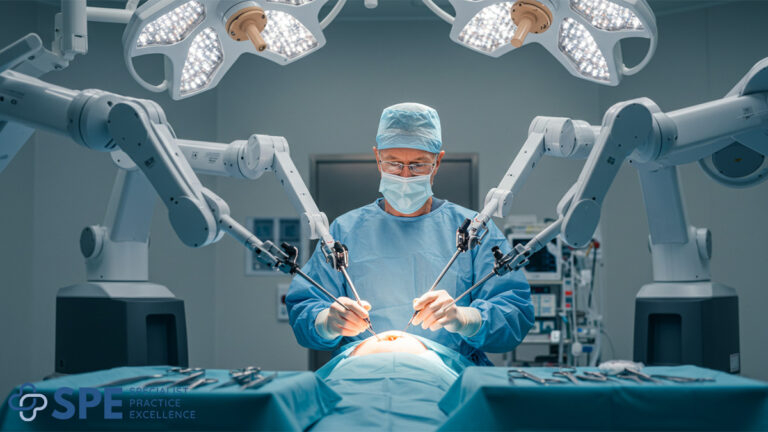
- Robotic surgery with AI
- Surgeon Training – AI-powered virtual reality (VR) and augmented reality (AR)
- Pre-operative planning
- Intra-operative decision making
- Post-operative monitoring
- Creating text-to-word pictures for surgeon education – tumours/cancers
- Generating simulated patient photos/results for cosmetic surgery
- Subjective evaluation of beauty and possible treatments
- Answering patient FAQs – Best Responses to Patient Qs
- Making Marketing Videos / Surgeon Voice Simulation
- To develop and evaluate models using pre-operative and intra-operative data
- Assimilation and evaluation of large amounts of complex health-care data
- Literature Analysis and Generated Citation Accuracy
- Patient Education – BRecon/Hand and Gender Surgery Info
- Breast Surgeon Bots – Decision-making guides
- Custom imaging and messaging for different ethnic markets
- More accurately determining the rate of burn healing and depth
- Designing neural networks for hand and other transplants
- Aiding skull reshaping in babies born with craniofacial deformities.
- Analysing images and detecting skin cancer
- Lymphography Pattern Classification
- Text to image for Hand Surgery
Building Your Clinic Systems with AI
You can use AI to create these clinic resources and tools
- Organisational Chart
- Job Roles Defined
- Job Description templates
- Job Postings – Best Ads & Platforms
- Recruitment – Socials, Emails
- Selection – Qs, Testing, References
- Induction and Onboarding Checklists
- Online Training Programs
- Payroll Services & Employee Benefits
- Employee Handbook / Policies
- Industry Regulations & Compliance
- Performance Management – Appraisals, KPIs. Feedback
- Conflict Resolution / Termination
- Employee Engagement Methods
- Teambuilding Activities
- Bonus & Incentives Design
Developing Your Clinic Marketing Resources with AI
You can use AI to create these clinic resources and tools
- Marketing Strategy
- SWOT Analysis
- Target Market Personas
- Value Proposition
- Website Analysis & SEO
- Content Creation & Rewriting
- Image Creation
- Video Creation
- AI ChatBots – trained
- AI Customer Service Agents
- Trained GPTs for Plastic Surgery
- Call Analysis & Coaching
- Consultation Improvements
- Data Analysis & Insights
- Social media Marketing
Growing Your Clinic Sales using Better Sales Systems & Playbooks with AI
You can use AI to create these clinic resources and tools
- How to ask for referrals
- How to ask for reviews
- How to get better Photos
- Sales scripts & Practice
- Objection handling phrases
- Better email templates
- Top surgery sales tips
- Consult Roleplays & Coaching
- Credentialling and Bios
- Know your services – find the reasons Why
- Writing better email responses
- Analyse inbound recorded calls
- Analyse Presentation Videos
Do’s and Don’ts about AI for Plastic Surgeons and Plastic Surgery Practices
Here’s a list of 10 DOs and 10 DON’Ts about AI for plastic surgeons and their practices.
AI for Plastic Surgeons
Do’s
- Do use AI medical scribes to save time on consultation and operative notes.
- Do explore AI facial analysis and 3D simulation tools to improve pre-operative planning.
- Do integrate AI chatbots for handling FAQs and appointment requests outside office hours.
- Do apply AI for literature reviews to stay updated on reconstructive and cosmetic surgery research.
- Do use AI-driven translation tools to improve communication with multicultural or international
patients. - Do consider AI recovery apps for monitoring post-operative progress and detecting complications early.
- Do train your staff on how to use AI tools effectively to ensure adoption and compliance.
- Do review AI-generated content for accuracy, tone, and alignment with AHPRA/medical advertising
guidelines. - Do use AI-powered SEO and marketing tools to refine your website, social media, and patient engagement.
- Do keep informed about emerging AI models (like ChatGPT, Claude, Gemini, Grok) that may improve clinical
decision-making.
Dont’s
- Don’t rely on AI tools without human oversight — always confirm accuracy and clinical appropriateness.
- Don’t use AI-generated patient photos or outcomes without clear disclaimers to manage expectations.
- Don’t upload patient data into unsecured AI platforms that risk privacy or HIPAA/AHPRA compliance
breaches. - Don’t use consumer beauty filters as substitutes for professional-grade imaging tools.
- Don’t neglect informed consent — patients must know when AI is used in their care or communication.
- Don’t assume AI can replace experienced staff; it should enhance, not eliminate, the human touch.
- Don’t ignore integration — choosing AI that doesn’t connect with your EMR or practice systems leads to
inefficiency. - Don’t let AI marketing tools over-promise results or use testimonials if you practice in regulated
regions (e.g., Australia). - Don’t forget to train your team on AI ethics, privacy, and responsible use of automation.
- Don’t view AI as a one-time setup — it requires regular updates, monitoring, and fine-tuning to remain
effective.
Useful AI Presentations
FAQs about AI for Plastic Surgeons
How can AI help plastic surgeons reduce medico-legal risks in patient care?
What are the best AI tools for pre-operative planning in complex plastic surgery cases?
How do plastic surgeons use AI to personalise post-operative recovery for patients?
Can AI improve the accuracy of patient selection and suitability for cosmetic surgery?
How do AI-driven chatbots improve plastic surgery practice efficiency compared to traditional phone staff?
What role does AI play in medical literature research for reconstructive plastic surgery?
How are plastic surgery practices using AI for financial and operational management?
What are some surprising ways AI is being used in plastic surgery staff training?
How might AI change the way plastic surgeons evaluate beauty standards across different cultures?
What future AI breakthroughs could impact plastic surgery practices in the next five years?
How can AI-powered predictive analytics improve surgical scheduling in plastic surgery practices?
What are the ethical concerns of using AI in cosmetic surgery consultations?
How can AI assist in multilingual patient communication in international plastic surgery practices?
Implementing AI in Your Plastic Surgery Practice
AI is no longer optional for modern plastic surgery practices — it is quickly becoming the competitive edge that separates thriving clinics from those falling behind. By adopting the right AI-powered scribes, research tools, chatbots, and patient engagement apps, surgeons can save time, reduce stress, and focus on what matters most: delivering safe, high-quality surgical outcomes. From streamlining consultations and operative notes to enhancing marketing, staff training, and business systems, AI offers practical solutions that can immediately improve both the patient experience and the practice’s bottom line.
Specialist Practice Excellence is committed to helping surgeons and their teams navigate this fast-changing landscape. Our growing collection of AI blogs, tool lists, and practical guides provide step-by-step insights into how to use AI effectively in a clinical setting. Whether you are just starting out with AI scribes or looking to scale your entire practice with advanced automations, the resources are here to support you.
Explore the full BIG LIST of recommended AI tools and discover how to make AI your partner in creating a more efficient, resilient, and future-ready plastic surgery practice.
Further Reading – AI Blogs by David Staughton SPE Practice Consultant
- The Future of AI for Plastic Surgery and Plastic Surgeons
- Best AI Tools, Apps, Agents & Bots for Plastic Surgeons & their Practice – the BIG LIST for plastic surgeons
- AI Medical Scribes for Surgeons & Doctors – LIST
- Best AI Video Making Tools for Plastic Surgeons – LIST
- AI Tools for Medical Literature Research and Article Writing – LIST
- 100 Ways Plastic Surgeons can use ChatGPT in their Plastic Surgery Clinic – LIST
- AI Productivity tools for Plastic Surgery – LIST
- Using AI to Make a Book Summary that is customised to you