
Supporting Plastic Surgery Patient Wellbeing and Mental Health during Recovery
Recovery from plastic surgery is not only physical. While incisions, drains, and scars are visible, many patients struggle with invisible challenges — anxiety, low mood, body image concerns, or post-operative regret. For nurses, these emotional and psychological factors are just as important to address as wound care or pain management.
In private practice, where patient expectations are often high and recovery is closely scrutinised, supporting mental health and wellbeing becomes a core part of nursing care. This article explores how nurses can provide reassurance, recognise distress, and empower patients to heal both physically and emotionally.
Why Mental Health Support Matters in Plastic Surgery Recovery
- Emotional adjustment – patients may feel vulnerable after surgery.
- Anxiety and depression risk – recovery dips are common, especially in the first 2 weeks.
- Body image impact – swelling and bruising can temporarily obscure results, leading to regret.
- Patient safety – unrecognised distress can escalate to poor compliance or self-harm risk.
- Satisfaction and trust – patients who feel supported emotionally are more likely to be satisfied overall.
The Nurse’s Role in Supporting Wellbeing

- Provide empathetic listening and acknowledge emotions.
- Normalise the “post-op blues” without minimising concerns.
- Monitor for red flags that suggest deeper psychological issues.
- Encourage coping strategies such as rest, nutrition, and light activity.
- Involve families where appropriate, with patient consent.
- Escalate concerns to the surgeon or GP when necessary.
Emotional Challenges Common in Plastic Surgery Recovery
- Fear of complications – every bruise or sensation may feel alarming.
- Temporary regret – patients question their decision during the early recovery dip.
- Body image fluctuation – swelling hides final results, leading to disappointment.
- Social pressure – friends or colleagues may judge the decision for surgery.
- Loss of independence – patients needing help at home may feel frustrated or anxious.
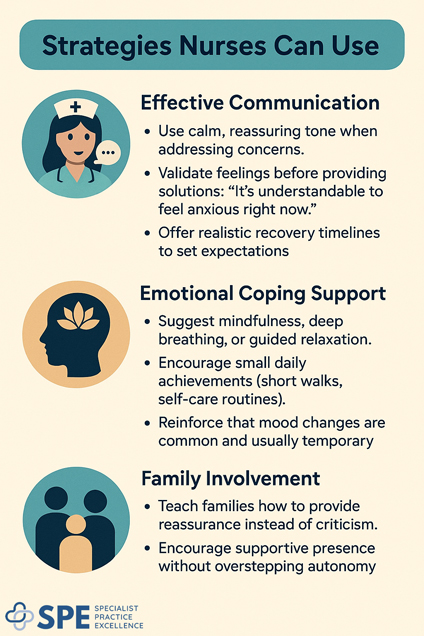 Strategies Nurses Can Use
Effective Communication
- Use calm, reassuring tone when addressing concerns.
- Validate feelings before providing solutions: “It’s understandable to feel anxious right now.”
- Offer realistic recovery timelines to set expectations.
Emotional Coping Support
- Suggest mindfulness, deep breathing, or guided relaxation.
- Encourage small daily achievements (short walks, self-care routines).
- Reinforce that mood changes are common and usually temporary.
Family Involvement
- Teach families how to provide reassurance instead of criticism.
- Encourage supportive presence without overstepping autonomy.
Red Flags in Mental Health During Recovery
- Persistent low mood beyond 2 weeks.
- Expressions of hopelessness or regret that do not improve.
- Refusal to mobilise, eat, or engage in self-care.
- Panic attacks or severe anxiety interfering with healing.
- Verbal or written mention of self-harm or suicidal thoughts.
These require immediate escalation to the surgeon or GP, and sometimes referral to mental health services.
Do’s and Don’ts of Supporting Patient Wellbeing
Do’s
- Do acknowledge emotional distress without minimising it.
- Do explain that recovery has ups and downs.
- Do provide reassurance with facts and timelines.
- Do encourage rest, hydration, and nutrition for mood support.
- Do check in regularly, especially in the first 2 weeks.
- Do involve families when appropriate.
- Do escalate if red flags persist.
Don’ts
- Don’t dismiss patient concerns as “just in your head.”
- Don’t overload patients with too much information at once.
- Don’t ignore signs of withdrawal or distress.
- Don’t allow families to undermine patient autonomy.
- Don’t downplay complications that may fuel anxiety.
- Don’t assume all patients have the same coping skills.
- Don’t delay escalation when psychological safety is at risk.
FAQs on Supporting Patient Wellbeing and Mental Health
General Patient Wellbeing FAQs
Q: Is it normal for patients to feel regret after surgery?
Yes, temporary regret or “post-op blues” is common in the first 1–2 weeks and usually resolves.
Q: How can nurses reassure patients without dismissing them?
By validating feelings first, then offering realistic recovery expectations.
Q: How long do emotional fluctuations usually last?
Most patients feel more stable after 2–3 weeks as swelling improves and routines resume.
Plastic Surgery Patient Anxiety FAQs
Q: How can nurses support patients with high anxiety?
Provide calm explanations, encourage deep breathing, and reassure them that symptoms are normal unless red flags appear.
Q: Can anxiety increase pain perception?
Yes. Anxiety lowers pain thresholds and can make discomfort feel more intense.
Q: How can families help with anxiety?
By providing reassurance, encouraging mobility, and reminding patients of positive outcomes.
Depression and Low Mood FAQs
Q: What is the difference between “post-op blues” and depression?
Blues are temporary mood dips; depression is persistent, affecting daily function and requiring medical review.
Q: How should nurses respond to persistent low mood?
Escalate to the surgeon or GP and consider referral to mental health services.
Q: What self-care strategies help with mood?
Adequate sleep, balanced nutrition, hydration, gentle movement, and social support.
Body Image FAQs
Q: Why do some patients feel disappointed early in recovery?
Swelling, bruising, and scars temporarily obscure results, leading to unrealistic comparisons.
Q: How can nurses help with body image concerns?
By explaining healing stages and reassuring that results take time to appear.
Q: Should nurses show before-and-after recovery timelines?
Yes, if available — these visuals help set realistic expectations.
Red Flag FAQs
Q: When should mental health concerns be escalated?
If patients express hopelessness, refuse self-care, or mention self-harm.
Q: What if a patient has panic attacks during recovery?
Provide reassurance, encourage slow breathing, and escalate if attacks persist.
Q: Can emotional distress ever mask complications?
Yes. Always rule out medical causes first before attributing symptoms to anxiety.
Private Practice FAQs
Q: Do private practice patients expect more emotional support?
Yes, they often expect personalised reassurance and access to staff between visits.
Q: What’s the most common wellbeing gap in private care?
Patients underestimating the emotional rollercoaster of recovery.
Q: How can follow-up calls support wellbeing?
They provide reassurance, detect early red flags, and strengthen patient trust.
Taking Action and Implementing
Supporting patient wellbeing during recovery is a cornerstone of nursing care. Physical healing is only one part of the journey; emotional stability and confidence are equally vital.
Nurses can make a profound difference by recognising emotional dips, offering reassurance, teaching coping strategies, and escalating when red flags appear. Empowering patients to care for both body and mind leads to smoother recoveries, safer outcomes, and greater long-term satisfaction.
When patients feel supported holistically, they are better equipped to face challenges, follow care instructions, and celebrate their surgical results with confidence.