Local Area Marketing Optimisation for a Plastic Surgeon – How to Get Known in the Local Area
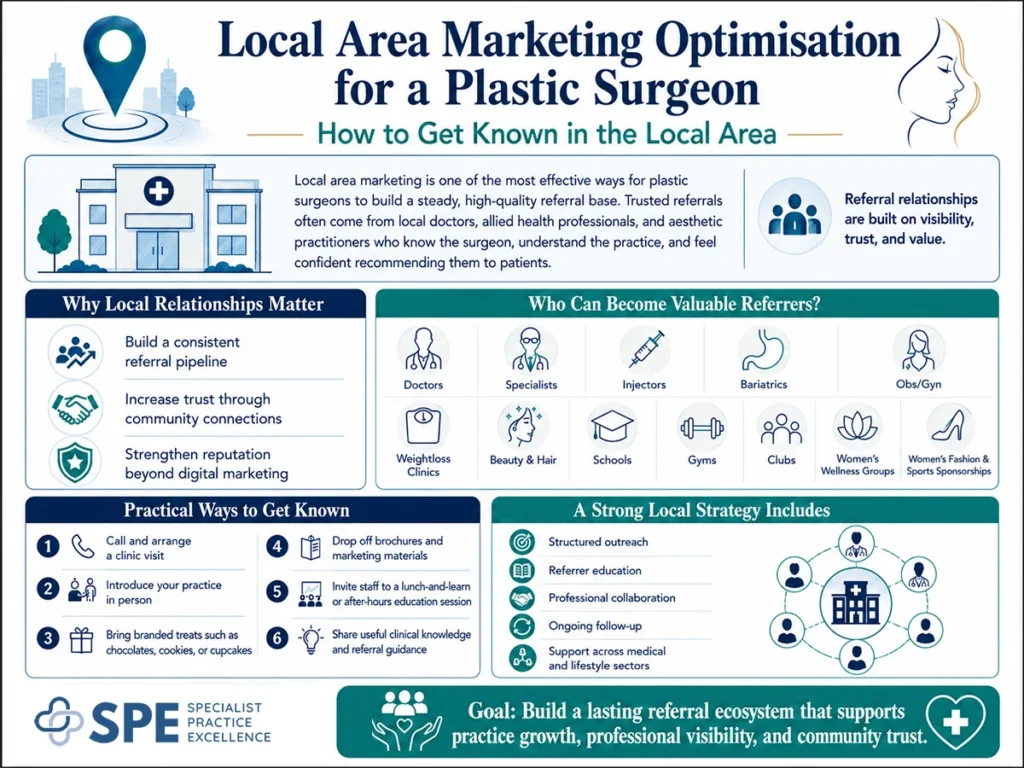
Local area marketing remains one of the most underused yet powerful strategies for plastic surgeons who want to grow a consistent, high-quality referral base. While online visibility and digital campaigns can attract new patient leads, the most trusted referrals still come from established relationships with local doctors, allied health professionals, and aesthetic practitioners. These referrers act as community advocates — guiding patients toward reputable specialists they know and trust.
For a modern plastic surgery practice, investing time and energy into building genuine local relationships can create a steady pipeline of pre-qualified patients. Beyond a handshake and business card, today’s local area marketing involves structured outreach, education, and collaboration across both medical and lifestyle sectors. Done well, it positions the surgeon as the go-to expert in their region — someone who supports colleagues, shares knowledge, and delivers excellent patient outcomes.
You can build solid referrer relationships with Doctors, Specialists, Injectors, Bariatrics, Obs/Gyn, Weightloss Clinics, Beauty / Hair, Schools, Gyms, Clubs, Womens Wellness Groups, and
Womens fashion and sports (sponsorships).
This guide explores practical ways to strengthen local connections, from doctor engagement and referrer education programs to creative collaborations with beauty and wellness professionals.
A great way to start is by getting known – call to arrange a clinic visit, bring branded carbohydrates (Chocolates, Cookies or Cupcakes etc) and drop off some marketing materials. Organise an educational session with the doctors and staff – lunch and learn or after hours event.
Whether your goal is to increase surgical case referrals, expand professional visibility, or deepen trust within your community, these strategies will help you build a lasting referral ecosystem that supports your practice’s growth and reputation.
Here are 20 ways to optimise your local area marketing to build your brand and get more patient referrals in the local area:
1. Medical Referrer Strategies
Build trusted partnerships with local doctors and specialists
- Create a Referrer Relationship List: Identify 50+ key GPs, dermatologists, ENTs, injectors, and physiotherapists within a 10–15 km radius.
- Deliver a “Referrer Welcome Pack”: Professionally designed folder with:
- Surgeon’s bio and credentials
- Referral process and contact details
- Brochures or case examples
- Personal note from the surgeon or practice manager
- Quarterly Referrer Visits: Practice manager or rep to visit referrer clinics every 3 months with updates, event invitations, or seasonal materials.
- Co-Education: Offer CPD-accredited lunch-and-learn sessions for doctors/GPs or injectors on relevant surgical topics.
- “Refer with Confidence” Guide: Short PDF or printed guide showing what procedures you handle, who is a good candidate, and how to refer quickly.
2. Beauty, Wellness & Aesthetic Partnerships
Engage local businesses that see your ideal patients first
- Partner with local injectors, laser clinics, and skin specialists: Co-host educational sessions about when to refer for surgery vs. non-surgical treatments.
- Develop a “Preferred Partner” Program: Offer referral bonuses (non-financial), shared marketing exposure, or VIP networking events.
- Sponsor Beauty Business Awards or Local Salon Events: Create visibility in the aesthetic community.
- Host “Ask a Surgeon” Evenings: Invite beauty practitioners and medspa teams for private Q&A sessions.
3. Community Visibility & PR
Build authority and goodwill in your suburb or town
- Speak at local Rotary, Chamber of Commerce, or business lunches about confidence, reconstructive surgery, or health innovation.
- Support a Local Charity or Community Cause (e.g., domestic violence recovery, breast cancer, burns recovery).
- Local Media Outreach: Offer commentary for local newspapers or radio on surgical safety, new techniques, or patient education topics.
- Open Practice Day: Hold an annual open house for local professionals (not the public) to tour the facilities and meet the surgeon team.
4. Patient Referral Systems
Activate happy patients ethically
- Post-Op “Thank You” Program: Send handwritten notes or small branded gifts post-surgery.
- Create Educational Shareables: Provide PDFs or checklists that patients can share with friends (e.g., “How to Choose a Qualified Surgeon”).
- Stay Top of Mind: Quarterly newsletters with updates, safety information, or community involvement.
5. Networking & Professional Development
Stay visible where professionals meet
- Attend Local Medical Conferences or GP Networks: Position your practice as the go-to referral option for surgical cases.
- Host Joint Clinical Meetings: Invite local specialists to discuss complex cases collaboratively.
- Join local healthcare associations or women’s health alliances.
6. Local Digital Visibility (Hyperlocal SEO + Social Proof)
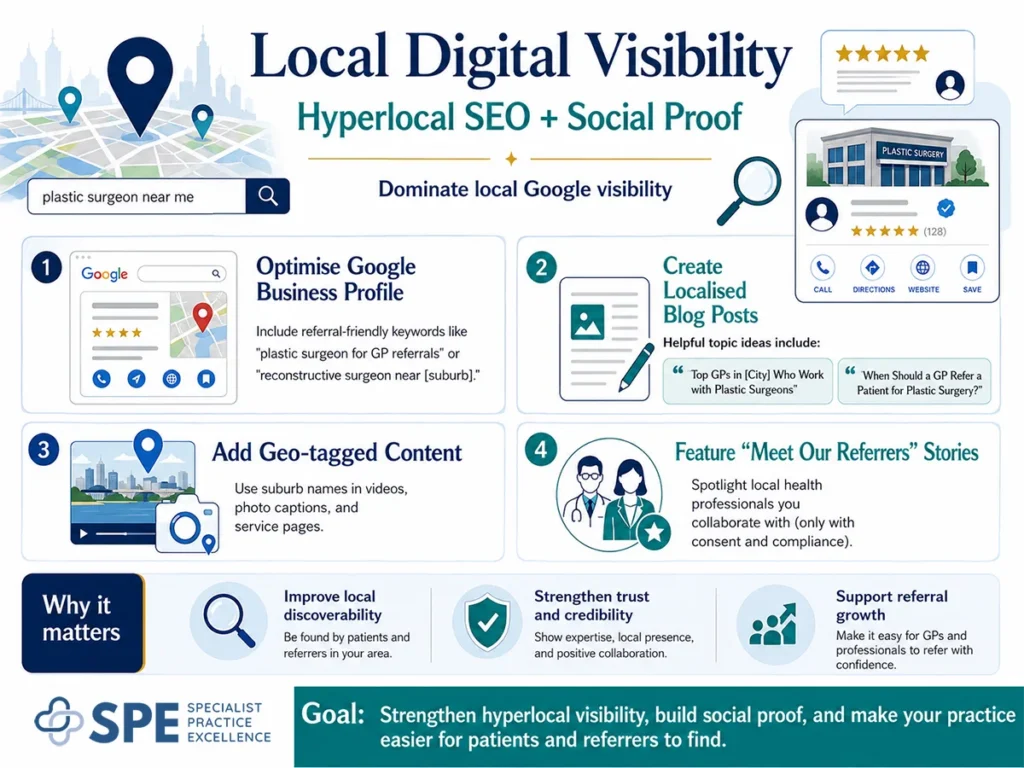
Dominate local Google visibility
- Optimise Google Business Profile: Include referral-friendly keywords like “plastic surgeon for GP referrals” or “reconstructive surgeon near [suburb].”
- Create Localised Blog Posts: Topics like:
- “Top GPs in [City] Who Work with Plastic Surgeons”
- “When Should a GP Refer a Patient for Plastic Surgery?”
- Add Geo-tagged Content: Use suburb names in videos, photo captions, and service pages.
- Feature “Meet Our Referrers” Stories: Spotlight local health professionals you collaborate with (only with consent and compliance).
7. Clinic Events & Recognition
Make your practice memorable
- Host Professional Appreciation Events: End-of-year “Thank You” drinks or brunch for referrers and staff.
- Celebrate Key Milestones: Anniversaries, awards, or hospital appointments – share these updates with local professionals.
- Offer Co-Branded Educational Series: Collaborate with local injectors, dentists, or physios on confidence or wellness events.
8. Tracking and Relationship Management
Use systems to make it sustainable
- Referrer CRM Tracking: Use Go High Level, HubSpot, or Genie to log:
- Date of last contact
- Referrals sent/received
- Preferences and feedback
- Quarterly Reports: Track top referring doctors and send them an appreciation note or update on patient outcomes.
- Referrer Portal: Add a referral form and resources page to your website for easy submissions.
9. Bonus “Low-Cost but High-Impact” Ideas
- Feature a “Referrer Spotlight” in your email newsletter.
- Offer free consultations for referrers’ own family members (discretionary).
- Run small group “surgical insight” breakfasts at nearby medical centres.
- Create local referral maps showing nearby GPs and how they link with your hospital access points.
10. Hospital & Specialist Integration
- Attend hospital meetings and surgical morbidity/mortality conferences to connect with peers.
- Offer on-call coverage or teaching support in your subspecialty area to stay visible to other hospital doctors.
- Create co-management protocols for reconstructive or post-cancer patients with oncology, dermatology, or ENT colleagues.
- Develop “Referral Feedback Loops” — send short updates back to GPs about their referred patients (maintaining confidentiality and AHPRA compliance).
- Submit short case reviews for internal hospital newsletters.
11. Private Health and Allied Networks
- Collaborate with physiotherapists and occupational therapists for recovery and scar management referrals.
- Link with dietitians and psychologists who support pre- and post-surgery patients.
- Offer joint care pathways — e.g., “post-weight loss body contouring program” co-developed with a bariatric clinic.
- Speak at allied health workshops or multidisciplinary team meetings.
12. Local Employer & Corporate Wellness Links
- Partner with local HR departments (e.g., corporate health or injury recovery programs) to provide educational sessions on body image, skin health, or reconstructive options after trauma.
- Sponsor local wellness initiatives like “Women in Business” events, self-care workshops, or hospital staff appreciation weeks.
- Offer employee referral privileges for staff of nearby hospitals or clinics.
13. Education & Outreach Content
- Produce micro-education content for referrers:
- “When to refer patients for eyelid surgery”
- “Surgical vs. non-surgical facial rejuvenation”
- Create Referrer E-Newsletters: Short, clinical updates or procedural innovations sent quarterly.
- Publish Referrer-Only Case Notes: Share anonymised case learnings or pre/post-operative pathways (fully compliant).
- Add a ‘Referrers’ Resource Page on your website with downloadable PDFs, videos, and referral forms.
14. VIP Referrer Relationship Program
- Identify your Top 20 Referrers: Offer them quarterly check-ins, lunch meetings, and personalised updates.
- Create Tiered Recognition:
- Gold referrers – 5+ referrals per year
- Silver referrers – 2–4 referrals per year
- Invite to special events: “Surgeon Insights” dinners, private networking nights, or small-group surgical masterclasses.
- Send milestone thank-yous: Recognise their contribution at the end of each year.
15. Community Events & Micro Visibility
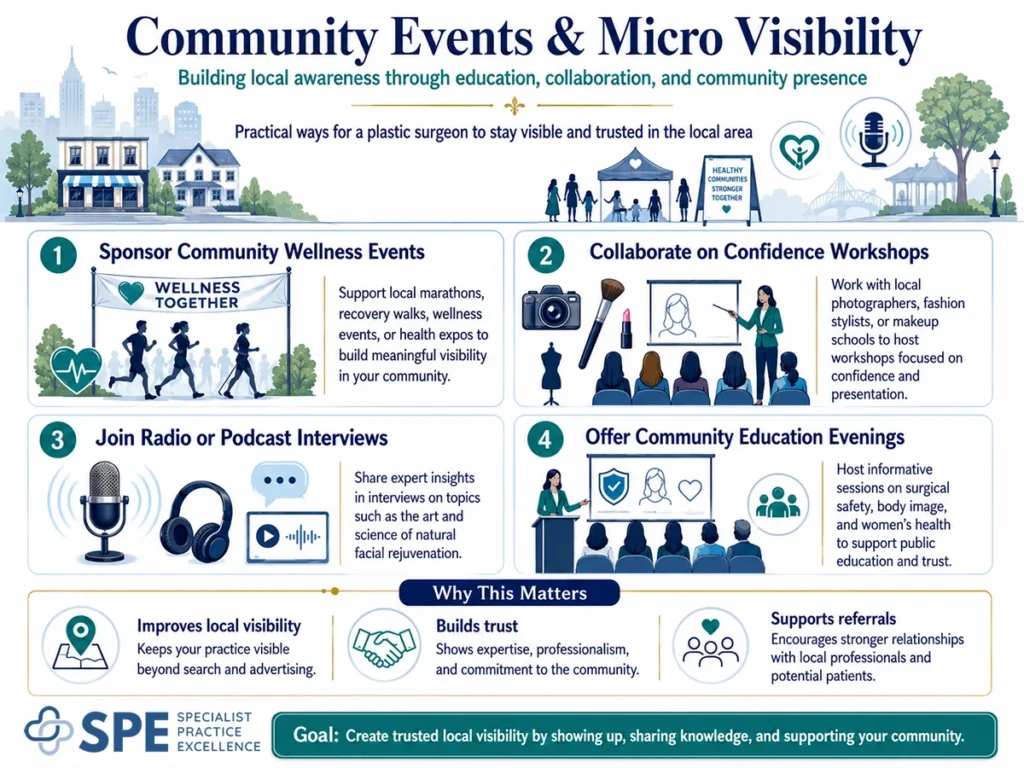
- Sponsor community fitness or wellness events (e.g., local marathons, recovery walks, or health expos).
- Collaborate with local photographers, fashion stylists, or makeup schools to showcase “confidence and presentation” workshops.
- Participate in radio or podcast interviews on topics like “The art and science of natural facial rejuvenation.”
- Offer community education evenings about surgical safety, body image, or women’s health.
16. Practice-Driven Local Brand Awareness
- Local press releases: New surgeon joining, awards, or new technology (AHPRA-compliant, no testimonials).
- Branded practice cars or community signage: Non-soliciting, discreet, but recognisable branding.
- Geo-fencing ads for referrers: Use Meta or Google to target local GPs, nurses, and clinic owners with professional updates, not consumer offers.
- Feature on local healthcare directories or hospital partner listings.
17. Collaborations & Joint Ventures
- Launch a “Referrer Advisory Board” of 5–6 local GPs and specialists who provide quarterly feedback and guidance.
- Partner on charity surgical missions or community clinics — builds media exposure and collegial goodwill.
- Co-sponsor educational symposiums or workshops with device companies, dermatologists, or physiotherapists.
18. Seasonal Campaigns
- Quarterly educational focus themes:
- Summer – Skin cancer reconstruction & sun safety
- Autumn – Breast reconstruction awareness
- Winter – Facial surgery & recovery education
- Spring – Body contouring after weight loss
- Send referrers themed resources, invitations, or branded seasonal gifts (AHPRA-compliant, low-value).
19. Digital Relationship Management
- Automate referrer contact sequences: Welcome email → Monthly insights → Quarterly call → Annual event.
- Segment referrers in your CRM: GPs, injectors, specialists, allied health.
- Create referral intake tracking dashboards: Identify which referrers are slowing down and re-engage them proactively.
- LinkedIn Outreach: Connect professionally, share educational posts, tag referrers when appropriate.
20. Clinic Environment & Experience
- Train front-desk staff to recognise and warmly welcome referrers’ offices when they call.
- Fast-track appointments for referred patients.
- Provide a professional referrer communication channel: dedicated phone line or email like referrals@clinicname.com.au.
- Send professional thank-you notes to referrers after a referral closes successfully.
FAQs about Local Area Marketing for Plastic Surgeons in Australia (AHPRA)
Focus on professional education, communication, and collaboration rather than incentives or promotions that could be seen as inducements.
Host educational workshops, develop referrer resource packs, and maintain clear patient feedback loops to build professional trust.
No – AHPRA and TGA regulations prohibit financial or material incentives for referrals. Recognition must remain ethical and educational in nature.
Include a “For Referrers” page with referral forms, educational materials, and professional bios — but avoid patient testimonials or outcome claims.
Use LinkedIn or Facebook to share medical education, hospital updates, and event invitations, not before-and-after images or patient stories.
Through co-branded education, collaborative care pathways, and joint safety sessions that highlight surgical expertise and patient welfare.
Send handwritten notes, host professional appreciation events, or share educational updates — never offer gifts or discounts.
Yes – involvement in local health and wellness initiatives raises awareness without breaching advertising restrictions.
By tracking referrer interactions, managing educational events, and coordinating consistent professional communication.
A decline in referrals, slower communication, or missed updates can signal it’s time for a professional visit or collaborative discussion.
FAQs about Local Area Marketing for Plastic Surgeons in USA etc (Non-AHPRA)
Offer joint events, co-marketing opportunities, and referral reward programs that recognise collaboration and mutual patient care.
Regular contact, digital newsletters, and CPD-style webinars can keep the surgeon top-of-mind with primary care and specialty referrers.
Yes – where permitted by state and federal law, surgeons can use ethical referral rewards such as education credits or professional appreciation gifts.
Positive testimonials build social proof, showing local providers that referred patients are satisfied with outcomes and care quality.
Optimising your Google Business Profile with referrer-focused keywords, hospital affiliations, and consistent updates improves professional visibility.
Topics like new surgical techniques, patient recovery innovations, and collaborative care case studies attract attention from busy doctors.
Yes – influencer collaborations can enhance brand awareness among professionals and patients, if done transparently and ethically.
Automated email sequences, follow-up reminders, and analytics dashboards can help maintain steady contact with referrers and track performance.
LinkedIn can showcase surgeon expertise, promote professional events, and connect directly with local medical and aesthetic professionals.
Consistent relationship nurturing, educationa
Taking Action & Implementing
Building a thriving referral network isn’t about quick wins — it’s about creating meaningful, professional relationships that last. By consistently showing up for your local community, educating peers, and supporting other practitioners, you position your practice as a trusted surgical partner rather than just another option. Over time, this steady presence translates into confidence, credibility, and a sustainable stream of patient referrals from people who genuinely believe in your work.
The most successful surgeons treat local marketing as an extension of their professional values — combining integrity, generosity, and excellence in patient care. Every interaction with a referrer, from a GP update to a coffee catch-up, is an opportunity to demonstrate expertise and empathy. When referrers know that their patients are in skilled and caring hands, they become loyal advocates who actively promote your practice.
Taking action on these strategies can help your clinic move beyond digital visibility to genuine local influence. Start small, track what works, and build momentum with regular outreach, education, and appreciation. In a competitive market, the surgeons who invest in authentic, community-based relationships are the ones who grow stronger, more resilient, and more respected year after year.
Further Reading
- Practice Marketing Strategies for Plastic Surgeons
- Plastic Surgeon Influencers and Social Media Stars
- Best Cosmetic Surgery Patient Review Sites