Helping Plastic Surgery Patients Cope with Pain, Anxiety, and Emotional Issues
Recovery from plastic and cosmetic surgery is more than just a physical process. While incisions, drains, and dressings demand clinical attention, many patients experience pain, anxiety, and emotional upheaval that can be just as challenging. Some may question their decision, worry about their appearance, or feel overwhelmed by the recovery timeline.
For nurses in private practice, recognising and supporting these emotional dimensions is just as important as monitoring wounds and vital signs. Pain and anxiety are deeply interconnected — anxiety can amplify pain, and poorly controlled pain can increase anxiety. Effective nursing care involves addressing both, while also providing reassurance and emotional support to patients and their families.
Why Pain and Anxiety Go Hand-in-Hand
Pain is not just a physical sensation; it is shaped by emotional and psychological factors. Anxiety lowers pain thresholds, while pain fuels more anxiety. This cycle can leave patients feeling helpless, particularly in the days immediately after surgery.
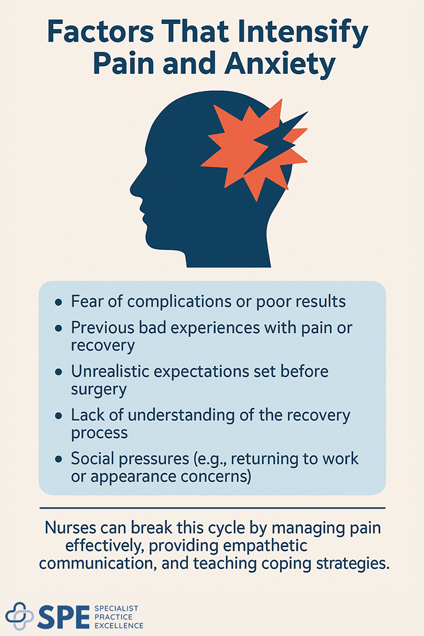
Factors That Intensify Pain and Anxiety
Fear of complications or poor results
Previous bad experiences with pain or recovery
Unrealistic expectations set before surgery
Lack of understanding of the recovery process
Social pressures (e.g., returning to work or appearance concerns)
Nurses can break this cycle by managing pain effectively, providing empathetic communication, and teaching coping strategies.
Nursing Strategies for Pain and Anxiety Management
Clinical Approaches to Pain
Use multimodal pain relief: combine paracetamol, NSAIDs, and opioids when appropriate.
Pre-medicate before activities like mobilisation or dressing changes.
Monitor for breakthrough pain and escalate if persistent.
Record pain using a validated scale and reassess after interventions.
Supporting Anxiety and Emotional Wellbeing
Reassure patients that discomfort and emotional fluctuations are normal.
Explain recovery timelines to reduce uncertainty.
Offer relaxation techniques such as deep breathing, mindfulness, or distraction.
Provide realistic encouragement, celebrating small milestones.
Recognise when professional psychological support may be needed.
Communicating Effectively with Anxious Patients
Acknowledge feelings – “It sounds like you’re worried this pain means something’s wrong.”
Normalise experiences – “Many patients feel more emotional in the first week after surgery.”
Give control – Allow patients to choose the timing of certain tasks (e.g., drain emptying, walking attempts).
Be present – Sometimes sitting quietly with a patient offers more comfort than words.
Emotional Support in Private Practice Nursing
Unlike hospital nurses who may see patients briefly, private practice nurses often have closer relationships with patients across multiple visits. This allows them to:
Track emotional changes over time
Provide continuity of reassurance
Spot patterns of distress early
Tailor education to each patient’s personality and coping style
Nurses who show compassion not only improve recovery but also strengthen the reputation of the practice.
Red Flags – When Anxiety or Pain Signals a Bigger Issue
Sudden, severe pain unrelieved by medication (possible complication)
Patient expressing despair or regret beyond normal adjustment
Refusal to mobilise or eat due to fear of pain
Panic attacks or hyperventilation interfering with recovery
Expressions of hopelessness or suicidal thoughts (rare but critical)
These require prompt escalation — to the surgeon for clinical issues or to mental health professionals for psychological distress.
Do’s and Don’ts of Pain, Anxiety, and Emotional Support
Do’s
Do assess both physical pain and emotional state regularly.
Do validate patient concerns instead of dismissing them.
Do use multimodal pain strategies to improve comfort.
Do provide reassurance that healing takes time.
Do encourage small achievable goals to boost confidence.
Do involve families in reassurance and support.
Do escalate psychological red flags early to the surgeon or GP.
Don’ts
Don’t dismiss pain as “in your head” — physical and emotional pain are linked.
Don’t overload patients with too much information at once.
Don’t assume every patient has the same coping style.
Don’t minimise visible distress or tears — acknowledge and support.
Don’t allow patients to isolate — encourage safe social or family involvement.
Don’t delay intervention when anxiety prevents recovery progress.
Don’t underestimate how small gestures (like a follow-up call) ease anxiety.
FAQs on Pain, Anxiety, and Emotional Support
Pain Management FAQs
Q: Why do some patients still report high pain despite medication?
Pain perception is influenced by anxiety, past experiences, and psychological state. Reassess for complications, then support with both clinical and emotional strategies.
Q: How often should pain be reassessed after giving medication?
Every 30–60 minutes depending on the drug, with documented outcomes.
Q: Can poorly managed pain delay healing?
Yes. Pain increases stress hormones, which can impair wound healing and reduce mobility.
Anxiety and Emotional Support FAQs
Q: Is it normal for patients to regret their surgery in the first week?
Yes. Many experience a temporary dip in mood known as the “post-op blues.” This usually improves with time and reassurance.
Q: How can nurses support highly anxious patients?
Provide calm, frequent updates, use relaxation techniques, and encourage involvement of supportive family members.
Q: What if patients refuse to mobilise due to fear of pain?
Educate them on the benefits of movement, pre-medicate before mobilisation, and start with very small, supported steps.
Communication FAQs
Q: How can I explain pain expectations without frightening patients?
Be honest but reassuring: “You’ll feel discomfort, but it’s manageable and we’ll support you every step.”
Q: Should I talk to families about patient anxiety?
Only with patient consent. Involving families can help, but confidentiality and autonomy must be respected.
Q: How can I stop anxious patients from calling the clinic repeatedly?
Provide clear, written instructions, reassure them during calls, and schedule structured follow-ups to reduce uncertainty.
Family Involvement FAQs
Q: How should families be involved in supporting patients?
Encourage them to provide reassurance, assist with daily activities, and watch for red flags — but not to override clinical advice.
Q: Can families sometimes worsen patient anxiety?
Yes. Overprotective or critical relatives may heighten worry. Nurses should educate families on constructive support.
Q: What’s the best way to handle family members who question pain medication use?
Explain the role of multimodal pain management and reassure that medications are used safely under supervision.
Red Flags and Escalation FAQs
Q: When should emotional distress be escalated?
If patients show persistent hopelessness, severe anxiety preventing recovery, or any mention of self-harm.
Q: What’s the difference between normal post-op blues and clinical depression?
Blues are temporary (days to a week), while depression is persistent, impairs daily function, and requires professional review.
Q: Can anxiety ever mimic physical complications?
Yes. Panic attacks can cause chest pain, shortness of breath, or palpitations. Always rule out complications first.
Private Practice Context FAQs
Q: Do private practice patients expect more emotional support?
Yes. Patients paying for elective procedures often expect holistic care including reassurance and accessibility.
Q: How can follow-up calls improve emotional recovery?
They reassure patients, reduce unnecessary clinic visits, and build long-term trust in the practice.
Q: Should nurses recommend professional counselling?
Yes, if anxiety or distress persists. Collaboration with mental health providers supports safe recovery.
Taking Action and Implementing
Pain, anxiety, and emotional distress are inseparable aspects of plastic surgery recovery. For nurses in private practice, supporting patients beyond the physical is not just compassionate — it is essential for safe, smooth, and satisfying outcomes.
By combining effective pain management with empathetic communication and emotional support, nurses break the cycle of fear and discomfort. They help patients feel heard, empowered, and reassured through every stage of recovery.
In Specialist Practice Excellence, true recovery means more than healing incisions. It means guiding patients through the emotional ups and downs, ensuring they feel safe, supported, and confident in their decision. Nurses who master this holistic approach deliver care that is both clinically excellent and deeply human.
Specialist Practice Excellence provides Mentoring and Training on Practice Operations, Patient Lead
Generation & Enquiry Conversion for Specialist Surgeon practices in Australia, UK and USA.
Meet the Team
David Staughton
David Staughton is a Melbourne-based business growth strategist, keynote speaker, and certified consultant with 30+ years of experience across multiple industries. He helps specialist surgeons and small businesses improve operations, increase revenue, and build strong teams. David has delivered 750+ talks worldwide and holds CSP and CCEO credentials.
Michelle
Michelle Staughton is a highly experienced Practice Consultant and Operations Coach who specialises in helping specialist medical and surgical practices run more smoothly and efficiently. With extensive experience in healthcare management, she focuses on improving patient experience, streamlining clinic operations, and supporting practice growth.
Brooklyn
Brooklyn has over 8 years of experience in specialty consulting, focusing on business improvement and customer experience. She has worked in Reception, Enquiries, Consulting, and Accounts, giving her a strong understanding of the customer journey. As a mentor, she designs training programs that help teams deliver excellent service with confidence.
What We Do
SPE helps Specialist Surgeons to:
Improve practice operations
Manage time effectively
Grow income sustainably
Build stronger teams and better patient experiences