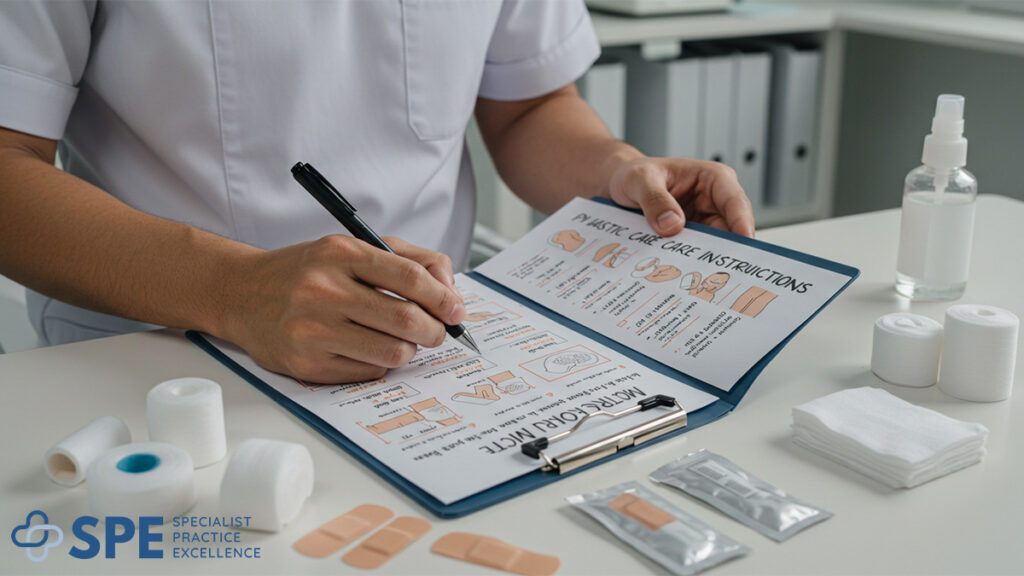
Best Practices for Plastic Surgery Nurses: Preventing Infection and Improving Wound Care
For patients undergoing plastic and cosmetic surgery, infection prevention and wound care are at the heart of safe recovery. Even the most technically perfect operation can be compromised if an incision becomes infected or poorly managed. In addition to threatening patient safety, infections can result in delayed healing, visible scarring, and dissatisfaction with results.
For plastic surgery nurses in private practice, the responsibility is twofold: preventing infection through vigilant care and ensuring wounds heal with minimal complications. This requires a blend of technical skill, patient education, and proactive communication.
Why Infection Prevention is Essential in Plastic Surgery
Plastic surgery often involves delicate incisions placed for minimal visibility. Any complication that disrupts wound healing can affect not only patient health but also the aesthetic outcome. Key reasons to prioritise infection prevention include:
Protecting patient safety and avoiding hospital readmission
Preserving cosmetic results and minimising scarring
Maintaining trust and satisfaction in a private practice setting
Reducing medico-legal risks associated with complications
Common Causes of Post-Operative Infections
Breaks in aseptic technique during dressing changes or drain care
Haematoma or seroma formation providing a medium for bacterial growth
Patient non-compliance with garment use, hygiene, or wound instructions
Underlying conditions such as diabetes or smoking that impair healing
Poor hand hygiene from staff, patients, or families
The Nurse’s Role in Infection Prevention
Nurses are the primary guardians of wound health in the post-operative period. Responsibilities include:
Adhering strictly to infection control protocols
Performing wound assessments with consistency
Maintaining aseptic technique during dressing or drain management
Identifying early signs of infection
Educating patients and families on wound care at home
Escalating promptly when concerns arise
Best Practices for Wound Care
Dressing Management
Use sterile technique at all times
Change dressings according to surgeon instructions
Assess wound edges, colour, and drainage during each change
Document findings clearly and consistently
Drain Care
Record volume, colour, and consistency of drainage
Keep insertion sites clean and dry
Secure drains to prevent accidental removal
Escalate sudden increases in bloody output or foul-smelling fluid
Incision Support
Ensure garments are applied correctly without undue pressure
Provide additional support for large wounds or body contouring incisions
Reinforce patient instructions on movement to protect wound integrity
Recognising Red Flags of Infection
Plastic Surgery Nurses must watch for:
Increasing redness spreading from incision
Swelling or warmth at the wound site
Foul-smelling or cloudy drainage
Fever or chills
Sudden worsening of pain
Gaping or separating incisions with discharge
Any of these signs require escalation to the surgeon for review.
Patient Education – A Cornerstone of Prevention
Patients discharged from private practices may not have the same monitoring as hospitalised patients. Education is therefore critical. Nurses should provide:
Simple wound care instructions in plain language
Demonstrations of garment use or drain care
Written guides and checklists for at-home care
Clear red flag lists with instructions on when to call
Reinforcement at every follow-up visit
Do’s and Don’ts of Infection Prevention and Wound Care
Do’s
Do use strict aseptic technique for all wound and drain care.
Do perform and document regular wound assessments.
Do teach patients and families how to recognise red flags.
Do encourage good hydration and nutrition for wound healing.
Do escalate immediately when infection is suspected.
Do ensure garments and dressings are correctly applied.
Do keep communication clear and simple to improve compliance.
Don’ts
Don’t reuse dressings or materials once contaminated.
Don’t overlook small changes in wound appearance.
Don’t allow drains to remain unsecured or unmanaged.
Don’t dismiss patient concerns as “normal” without assessment.
Don’t neglect the psychological impact of wound complications.
Don’t delay escalation if systemic infection signs appear.
Don’t assume verbal education alone is enough — always provide written instructions.
FAQs on Infection Prevention and Wound Care
Clinical Observation FAQs
Q: How do I tell the difference between normal post-op redness and infection?
Normal redness is localised and gradually improves. Infection redness spreads, is warm to touch, and is often accompanied by increasing pain or drainage.
Q: Can a wound smell slightly without being infected?
Some wounds have a mild odour during healing, but foul, persistent smells usually indicate infection.
Q: Why do some patients develop infections despite perfect technique?
Factors such as diabetes, smoking, poor nutrition, or compromised immunity can predispose patients regardless of clinical care.
Dressing and Drain Care FAQs
Q: How often should dressings be changed after plastic surgery?
Only as directed by the surgeon — unnecessary changes can disrupt healing. Frequency depends on the procedure and wound condition.
Q: What’s the most overlooked detail in drain management?
Accurate recording of output trends. Sudden changes in colour or volume are often the earliest red flags.
Q: Can compression garments cause infections?
Not directly, but poorly fitted garments can trap moisture or irritate incisions, creating conditions for infection.
Patient Behaviour FAQs
Q: What if a patient showers before wounds are fully healed?
Most incisions must remain dry initially. If patients shower too early, educate them on drying the site carefully and watch closely for signs of infection.
Q: Why do some patients ignore wound care instructions?
Overconfidence, lack of understanding, or fear of “bothering” the nurse can lead to non-compliance. Clear, repeated education and written guides reduce this.
Q: How can nurses improve compliance with wound care at home?
Simplify instructions, provide demonstrations, and check understanding before discharge.
Escalation FAQs
Q: When should I escalate wound concerns to the surgeon?
Any spreading redness, foul drainage, sudden swelling, or systemic symptoms like fever require escalation. Always be over-cautious, make good notes and follow protocols.
Q: What’s the safest communication with patients about possible infection?
Use calm, clear language: “I’d like the surgeon to review this early to make sure your healing stays on track.”
Q: Can over-escalation damage trust?
No. Patients generally appreciate caution. Under-escalation poses greater risks to both safety and reputation.
Taking Action and Implementing
Infection prevention and wound care are cornerstones of safe plastic surgery recovery. For nurses in private practice, this responsibility goes beyond sterile technique — it is about vigilance, education, and timely escalation. By combining technical skill with patient-centred communication, nurses safeguard not only health but also the aesthetic results patients seek.
In Specialist Practice Excellence, infection prevention is more than a checklist — it is a commitment to detail, consistency, and compassionate care. Every dressing change, every drain check, and every patient conversation contributes to outcomes that are both safe and satisfying.
Specialist Practice Excellence provides Mentoring and Training on Practice Operations, Patient Lead
Generation & Enquiry Conversion for Specialist Surgeon practices in Australia, UK and USA.
Meet the Team
David Staughton
David Staughton is a Melbourne-based business growth strategist, keynote speaker, and certified consultant with 30+ years of experience across multiple industries. He helps specialist surgeons and small businesses improve operations, increase revenue, and build strong teams. David has delivered 750+ talks worldwide and holds CSP and CCEO credentials.
Michelle
Michelle Staughton is a highly experienced Practice Consultant and Operations Coach who specialises in helping specialist medical and surgical practices run more smoothly and efficiently. With extensive experience in healthcare management, she focuses on improving patient experience, streamlining clinic operations, and supporting practice growth.
Brooklyn
Brooklyn has over 8 years of experience in specialty consulting, focusing on business improvement and customer experience. She has worked in Reception, Enquiries, Consulting, and Accounts, giving her a strong understanding of the customer journey. As a mentor, she designs training programs that help teams deliver excellent service with confidence.
What We Do
SPE helps Specialist Surgeons to:
Improve practice operations
Manage time effectively
Grow income sustainably
Build stronger teams and better patient experiences