
Table of Contents
- A Nursing Perspective on Pain Management in Cosmetic Surgery
- Why Pain Management Matters in Cosmetic Surgery
- The Nurse’s Role in Pain Management
- Non-Pharmacological Pain Management
- Patient Education in Pain Management
- Red Flags – When Pain Signals a Problem
- Enhancing the Patient Experience
- Do’s and Don’ts of Pain Management
- Taking Action and Implementing
- Further Reading
A Nursing Perspective on Pain Management in Cosmetic Surgery
Pain is one of the most significant concerns for patients undergoing cosmetic and reconstructive surgery. It is also one of the most complex aspects of nursing care. For plastic surgery nurses in private practice, pain management is more than administering analgesics — it requires a blend of observation, communication, empathy, and evidence-based intervention. How pain is managed in the early stages of recovery can influence not only the patient’s physical comfort but also their psychological adjustment, satisfaction with results, and long-term recovery outcomes.
This article provides a detailed nursing perspective on pain management in cosmetic surgery, with practical strategies, red flags, and insights tailored to the private practice setting.
Why Pain Management Matters in Cosmetic Surgery
Unlike other surgical specialties where patients often prioritise survival or function, cosmetic surgery patients usually arrive with high expectations for comfort, outcomes, and aesthetics. Poorly managed pain can lead to:
- Increased anxiety, fear, or regret about having surgery.
- Reduced mobility and higher risks of complications like DVT.
- Impaired wound healing due to stress hormones.
- Negative reviews or dissatisfaction with care.
For nurses, effective pain management demonstrates competence, builds trust, and creates a positive patient experience.
Understanding Pain in Cosmetic Surgery
Types of Pain
- Somatic pain – from incisions, sutures, and tissue trauma. Usually sharp or throbbing.
- Visceral pain – from deeper surgical work such as abdominoplasty or liposuction, often dull, crampy, or pressure-like.
- Neuropathic pain – tingling, burning, or shooting sensations, often from nerve manipulation during facelifts or breast procedures.
Factors That Influence Pain Perception
- Type of procedure – abdominoplasty and combined procedures often create higher pain levels than isolated surgeries like blepharoplasty.
- Patient expectations – fear or anxiety can heighten pain perception.
- Past experiences – patients who previously struggled with pain may anticipate and amplify it.
- Psychological state – depression, anxiety, or body image concerns can worsen pain tolerance.
The Nurse’s Role in Pain Management
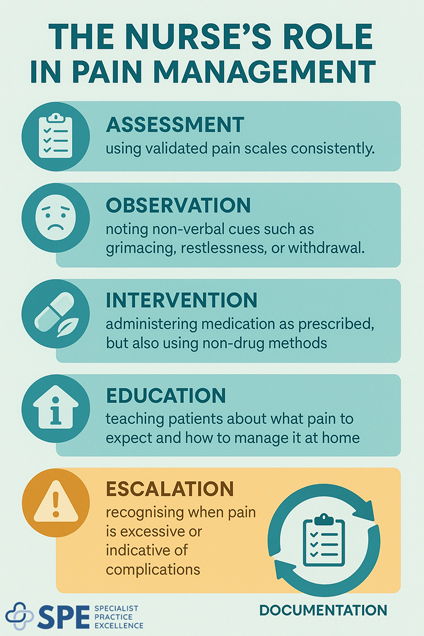
Nurses are central to assessing, monitoring, and responding to pain. In private practice, they may also have closer one-to-one patient contact than hospital ward staff. Key responsibilities include:
- Assessment – using validated pain scales consistently.
- Observation – noting non-verbal cues such as grimacing, restlessness, or withdrawal.
- Intervention – administering medication as prescribed, but also using non-drug methods.
- Education – teaching patients about what pain to expect and how to manage it at home.
- Escalation – recognising when pain is excessive or indicative of complications.
Pharmacological Pain Management
Common Medications Used in Cosmetic Surgery Recovery
- Paracetamol (acetaminophen) – cornerstone of multimodal pain control, given regularly.
- NSAIDs (ibuprofen, celecoxib, diclofenac) – reduce inflammation and pain but require caution with bleeding risk.
- Opioids (oxycodone, tramadol, morphine) – reserved for breakthrough or severe pain, with careful monitoring for side effects.
- Local anaesthetics – nerve blocks or wound infiltration used intraoperatively may reduce early pain.
Nurse Considerations
- Always check for allergies and previous drug reactions.
- Monitor for opioid side effects such as nausea, constipation, or respiratory depression.
- Encourage patients to take medications as prescribed, not just when pain escalates.
- Document time, dose, effect, and patient feedback clearly.
Non-Pharmacological Pain Management
Pain management isn’t just about medication. Nurses can use a range of supportive strategies, often overlooked but highly effective:
- Positioning – supporting incisions with pillows, raising the head of the bed after facelift, or bending knees after abdominoplasty.
- Cold therapy – applying ice packs (with precautions to avoid burns) to reduce swelling and discomfort.
- Relaxation techniques – deep breathing, mindfulness, or guided imagery.
- Distraction – conversation, music, or light entertainment can shift focus away from discomfort.
- Compression garments – when applied correctly, these provide support, reduce swelling, and minimise discomfort.
Patient Education in Pain Management
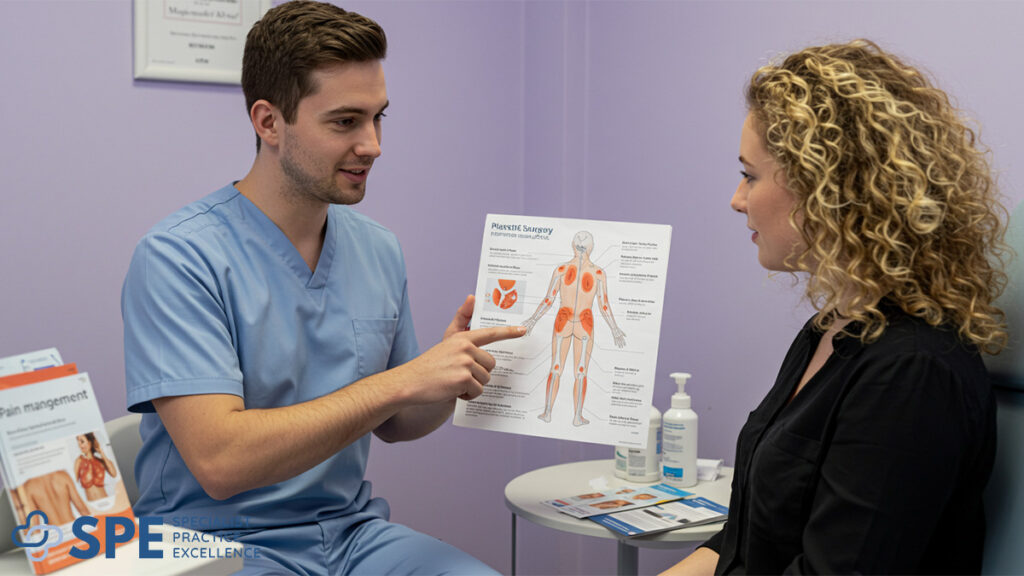
Patients often underestimate or misunderstand post-operative pain. Nurses can prepare them by:
- Explaining expected pain patterns for their specific surgery.
- Setting realistic expectations (mild to moderate discomfort is normal).
- Reassuring them that breakthrough pain is manageable and not a sign of surgical failure.
- Teaching safe ways to move, cough, or get out of bed to reduce strain on incisions.
- Providing written instructions alongside verbal guidance.
Red Flags – When Pain Signals a Problem
Not all pain is routine. Nurses must recognise when pain may indicate a complication:
- Sudden severe pain – may signal haematoma, bleeding, or nerve entrapment.
- Asymmetrical pain – especially in breast surgery, may suggest haematoma or implant issue.
- Pain with fever or redness – can indicate infection.
- Leg pain or calf tenderness – may suggest DVT.
- Chest pain or shortness of breath – always treat as an emergency (possible pulmonary embolism).
Escalation protocols must be clear and followed without delay.
Enhancing the Patient Experience
Patients remember how their pain was handled. Small nursing interventions can make a lasting difference:
- Checking in regularly and showing empathy.
- Offering reassurance that discomfort is expected and temporary.
- Involving families in comfort measures.
- Documenting carefully so the whole team is aligned.
This level of attentiveness often matters as much as the pain relief itself.
Do’s and Don’ts of Pain Management
Do’s
- Do assess pain using a consistent scale and record results clearly.
- Do combine pharmacological and non-pharmacological methods for best results.
- Do encourage patients to take analgesics proactively rather than waiting until pain is severe.
- Do educate patients on positioning, garments, and gentle movement to reduce pain.
- Do monitor for side effects of opioids and intervene early.
- Do reassure patients that some discomfort is normal while escalating when pain seems unusual.
- Do involve patients in decision-making to give them a sense of control.
Don’ts
- Don’t dismiss pain complaints, even if they seem minor.
- Don’t assume all patients experience pain the same way — tailor care.
- Don’t delay escalation when pain suggests a complication.
- Don’t rely solely on opioids; always consider multimodal strategies.
- Don’t forget to check garment fit and dressing tightness as a source of pain.
- Don’t overload patients with medical jargon when explaining pain management.
- Don’t underestimate the psychological impact of poorly controlled pain.
FAQs for Pain Management in Cosmetic Surgery
Clinical Assessment FAQs
Q: Why do some patients report high pain scores but look comfortable?
Pain is subjective — cultural background, anxiety, or fear can amplify reported scores. Always treat pain reports seriously while cross-checking with observation.
Q: Can pain increase blood pressure after surgery?
Yes. Poorly controlled pain stimulates the sympathetic nervous system, raising blood pressure and heart rate, which can stress wounds and increase bleeding risk.
Q: How often should pain be reassessed after giving medication?
Ideally within 30–60 minutes depending on the drug. Document the effect and whether further intervention is needed.
Pharmacological Management FAQs
Q: Why do some patients get itchy after opioids?
Opioid-induced histamine release can cause itching. Antihistamines may help, but always monitor for respiratory depression.
Q: Are NSAIDs safe after cosmetic surgery?
They can be safe if prescribed, but must be used cautiously due to bleeding risks. Always check surgeon preference and patient history.
Q: Why does paracetamol work better when given regularly?
It maintains steady therapeutic blood levels, preventing breakthrough pain rather than reacting to it.
Non-Pharmacological Strategies FAQs
Q: Do compression garments really help with pain?
Yes. Properly fitted garments reduce swelling, provide support, and minimise discomfort, especially after body contouring procedures.
Q: Can guided breathing reduce surgical pain?
Yes. Deep breathing reduces anxiety and lowers stress hormones, indirectly improving pain tolerance.
Q: Are heat packs ever useful in cosmetic surgery pain?
Generally no — heat can increase bleeding and swelling. Cold therapy is safer in early recovery.
Patient Behaviour and Psychology FAQs
Q: Why do anxious patients often report more pain?
Anxiety activates the body’s stress response, lowering pain thresholds and amplifying discomfort. Addressing anxiety improves pain scores.
Q: How should nurses respond when patients say “the pain is unbearable”?
Validate the experience, reassess clinically, provide timely intervention, and escalate if pain is disproportionate to expectations.
Q: What if patients resist taking pain medication because they “don’t like pills”?
Educate them about the risks of uncontrolled pain — slower recovery, reduced mobility, and higher complication rates. Offer alternatives where possible.
Discharge and Home Care FAQs
Q: How can nurses prepare patients to manage pain at home?
Provide clear written instructions on medication schedules, positioning, activity limits, and when to seek help.
Q: Why do some patients stop pain medications too early?
They may fear dependence or underestimate the importance of regular dosing. Reassurance and education help ensure safe adherence.
Q: What’s the most common reason patients return with pain complaints?
Poor compliance with garment use, incorrect positioning, or inconsistent medication use. Reviewing basics can often resolve the issue.
Taking Action and Implementing
Pain management in cosmetic surgery is both a science and an art. For nurses in private practice, it requires careful observation, patient-centred communication, and a blend of pharmacological and non-pharmacological strategies. By recognising red flags, addressing anxiety, and educating patients effectively, nurses not only control pain but also improve healing, satisfaction, and overall outcomes.
Excellent pain management is one of the cornerstones of Specialist Practice Excellence — and it is often the part of care patients remember most.