A Strategy Guide for Plastic Surgeons and Practice Owners
The plastic surgery industry is undergoing one of the most significant structural shifts in its history. For over a decade and throughout the post-Covid cosmetic surgery boom, growth was driven by a combination of increasing social media influence, injectable treatments, and rising patient awareness. However, 2026 marks a transition away from that model toward something far more complex and strategically demanding.
Today’s environment is defined by:
- New patient demand driven by medical weight loss
- A shift toward natural, preservation-based outcomes
- Increasing economic pressure on patients & practices
- More informed, cautious, and selective patients
This is no longer a market where simply “doing good surgery” or “running ads” is enough.
The practices that will lead the next decade are those that understand not just what is changing, but how to structure their business around it.
As David Staughton, CEO of Specialist Practice Excellence, explains:
“2026 is not about chasing trends and fads. It’s about understanding the deeper shifts in patient behaviour and building a practice model that aligns with how people now think, decide, and invest in surgery.”
The Three Forces Reshaping Plastic Surgery
Before looking at individual procedures or services, it is critical to understand the three macro forces that are driving almost every trend in the industry.
1. The GLP-1 Transformation Wave
The rise of GLP-1 medications such as Ozempic, Wegovy, and Mounjaro is the single biggest disruptor of patient demand.
These medications are fundamentally changing the profile of patients entering plastic surgery.
Unlike traditional weight loss:
- Fat loss is rapid and often dramatic
- Skin does not have time to adapt
- Patients are often unprepared for the aesthetic consequences
This creates a new type of patient presenting with:
- Excess skin across the abdomen, arms, thighs, and back
- Facial deflation and accelerated ageing
- Breast volume loss and ptosis
- Hair thinning and metabolic changes
These patients are not niche – they are becoming mainstream.
From a commercial perspective, this represents:
- A new, expanding pipeline of surgical candidates
- Higher complexity cases
- Greater need for staged treatment planning
David Staughton notes:
“The GLP-1 patient is not just another consult – they are a completely different category of patient. Practices that recognise this and build dedicated pathways will dominate this space.”
2. The Shift to Preservation and Natural Outcomes
The aesthetic philosophy of the industry is evolving.
The previous era of augmentation – larger implants, heavier fillers, more visible results – is being replaced by a preference for:
- Subtle, undetectable outcomes
- Structural support rather than volume overload
- Long-term ageing compatibility
This shift is driving increased demand for:
- Fat grafting
- Preservation rhinoplasty
- Deep plane and preservation facelifts
- Smaller implants or implant removal
Patients are increasingly asking:
- “Will this age well?”
- “Will I still look like myself?”
This fundamentally changes both surgical planning and marketing messaging.
3. Wellness – The Integration of Treatment Ecosystems
Plastic surgery is no longer a standalone service.
In 2026, the most successful practices operate as integrated systems combining:
- Surgical procedures
- Non-surgical treatments
- Regenerative therapies and longevity
- Hormonal and metabolic optimisation
- Recovery protocols – skin and scar minimisation
Patients are not buying individual treatments.
They are buying comprehensive transformation journeys.
This integration creates:
- Higher lifetime patient value
- More predictable outcomes
- Stronger patient loyalty
The New Patient Mindset in 2026
One of the most important changes in the industry is not clinical – it is psychological.
Patients in 2026 are fundamentally different from those in previous years.
They are:

- More informed due to access to content and research
- More cautious due to awareness of complications and poor outcomes
- Less influenced by trends and social media aesthetics
- More focused on long-term outcomes
Most importantly, patients are no longer asking:
“What procedure should I get?”
They are asking:
“What is the right plan for me?”
This changes the role of the surgeon from provider to strategic advisor.
Practices that fail to adapt to this shift often experience:
- Lower conversion rates
- Longer decision cycles
- Increased indecision
Practices that adapt see:
- Higher trust
- Higher-value cases
- More committed patients
David Staughton summarises:
“The modern patient doesn’t want to be sold to. They want to be guided. The practices that understand that distinction are the ones growing fastest.”
Surgical Trends Defining 2026
1. Post-Weight-Loss Body Transformation
This is the largest growth category globally.
Procedures seeing increased demand include:
- Abdominoplasty / Tummy Tuck
- Body lifts – Lower and Upper
- Arm lifts
- Thigh lifts
- Buttock reshaping and lifting
This is not traditional body contouring for loose skin excision.
It is reconstructive aesthetic surgery following rapid fat loss.
Adjunct technologies are increasingly integrated:
- Renuvion
- BodyTite
- Quantum RF
- Ellacor microcoring
These tools are used to:
- Improve skin contraction / tightening
- Enhance contours
- Expand surgical outcomes
2. Younger Facelift Demographic
Facelifts are being performed earlier than ever.
Key drivers:
- Facial deflation and volume loss from losing weight
- Increased visual exposure (Zoom, video, social media)
- Greater awareness of surgical options
Typical age range is shifting toward:
- Late 30s
- 40s
Modern techniques include:
- Deep plane facelifts
- Preservation approaches
- Endoscopic methods – Brow Lift, Mid Face and Pony Tail Facelift
These procedures are now positioned as:
- Maintenance
- Prevention
- Structural support
3. Fat Grafting instead of Fillers
Using your own transferred Fat is becoming the preferred method of volume restoration .
Applications include:
- Face
- Breast
- Buttocks
- Hands
Advantages:
- Natural
- Long-lasting
- Biologically compatible
Emerging innovations such as AlloClae (cadaver-derived fat) are gaining attention, though they remain early-stage and require careful evaluation.
4. Breast Surgery Shifts
Breast surgery is undergoing a clear directional change.
Growth areas:
- Smaller implants
- Axillary (Armpit) Implantation instead of IMF
- Motiva Implants and preservation techniques
- Breast lift with auto-augmentation (no implant needed)
- Implant removal (BII-driven demand)
Declining demand:
- Large breast implants
- Over-projected aesthetics
This reflects a broader trend toward:
- Proportion
- Longevity
- Subtlety
- Modern Implant Design
5. Facial Surgery Integration
Standalone procedures are being replaced by integrated approaches.
Common combinations:
- Facelift + fat grafting + CO2 resurfacing
- Blepharoplasty + brow repositioning
- Neck + jawline + skin tightening
Blepharoplasty remains one of the highest-demand procedures due to:
- High visibility of results
- Lower perceived risk
- Strong return on investment for patients
6. Male Plastic Surgery Growth
Male patients represent a significant growth opportunity.
Key segments:
- Professional men / Executives
- Athletes / Gym Enthusiasts
- Gay male aesthetic market
Common procedures:
- Eyelid surgery
- Gynecomastia
- High-definition liposuction
- Subtle facial rejuvenation
Successful practices treat this as a distinct service line, not an extension of female patient marketing – with a separate male plastic surgery website, clinic area and staff.
7. Niche and High-Margin Procedures
Emerging areas include:
- Penis enhancement
- Vaginal rejuvenation (particularly post-weight loss – ‘Ozempic Vulva’)
- Rib remodelling / RibXScar – rib bending for trans and tummy tuck patients
- BBL revision surgery (mostly USA rather than UK/Aust)
These require:
- Careful positioning
- Strong clinical expertise and training
- Selective patient targeting and compliance
The Rise of the Revision Patient
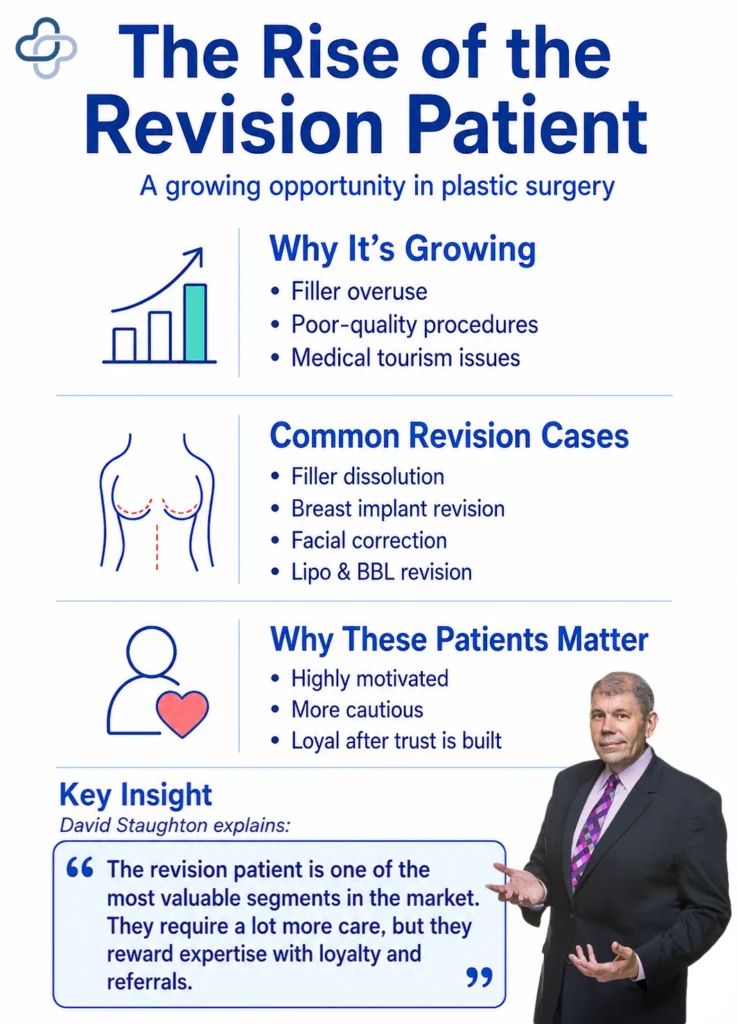
One of the most commercially significant trends is the growth of revision and corrective surgery.
Drivers include:
- Overuse of fillers in previous years
- Poor-quality procedures globally
- Medical tourism complications
Procedures include:
- Filler dissolution
- Breast Implant removal/repositioning
- Facial correction surgery
- Liposuction revision
- BBL revisions
These patients are:
- Highly motivated
- More cautious
- More loyal once trust is established
David Staughton explains:
“The revision patient is one of the most valuable segments in the market. They require a lot more care, but they reward expertise with loyalty and referrals.”
Non-Surgical Trends Supporting Surgical Growth
Non-surgical treatments are now integrated into surgical pathways.
1. Regenerative Aesthetics
Growth areas:
- PRP / PRF
- Exosomes
- Polynucleotides
- Stem-cell-based positioning
These are used to:
- Improve skin quality
- Support healing
- Enhance outcomes
2. Longevity and Hormonal Optimisation
Increasing demand for:
- BHRT – Bioidentical Hormone Replacement Therapies
- Peptides
- Metabolic support
These influence:
- Recovery
- Surgical readiness
- Long-term results
3. Hair Restoration
Driven by GLP-1-related hair loss, this is a growing category.
A range of solutions are available from medication to treatments and hair replacement surgery.
4. Skin Quality Technologies
Key devices:
- Sofwave
- Neogen
- CO2 resurfacing
- Plasma technologies
These enhance:
- Surgical results
- Longevity
5. Post Surgery Recovery Optimisation
Premium differentiation includes:
- Hyperbaric oxygen therapy HBOT
- Structured recovery pathways
Biggest Mistakes Practices Make

Despite clear trends, many practices are not adapting effectively.
Common mistakes include:
- Weak consultation processes and follow-ups (turbulent times means more effort required)
- Competing on price rather than brand positioning (Discounting)
- Continuing to market procedures instead of outcomes/solutions to patient problems
- Over-reliance on devices and injectables – especially fillers
- Failing to build GLP-1 patient pathways
- Ignoring revision opportunities
These gaps are creating a widening divide between high-performing practices and the rest of the market.
The New Patient Objections in 2026
Patient objections have evolved.
Beyond traditional objections of Price and Fear
Patients now ask:
- “Is this the right time?”
- “Should I stage this?”
- “Will this age well?”
This requires surgeons and patient co-ordinators to:
- Guide
- Educate
- Plan
Rather than just sell.
Marketing Reality in 2026
What is declining:
- Generic content on websites and social media
- Google Searches and website traffic (SEO)
- Procedure-focused marketing
- Before-and-after overload
What is working:
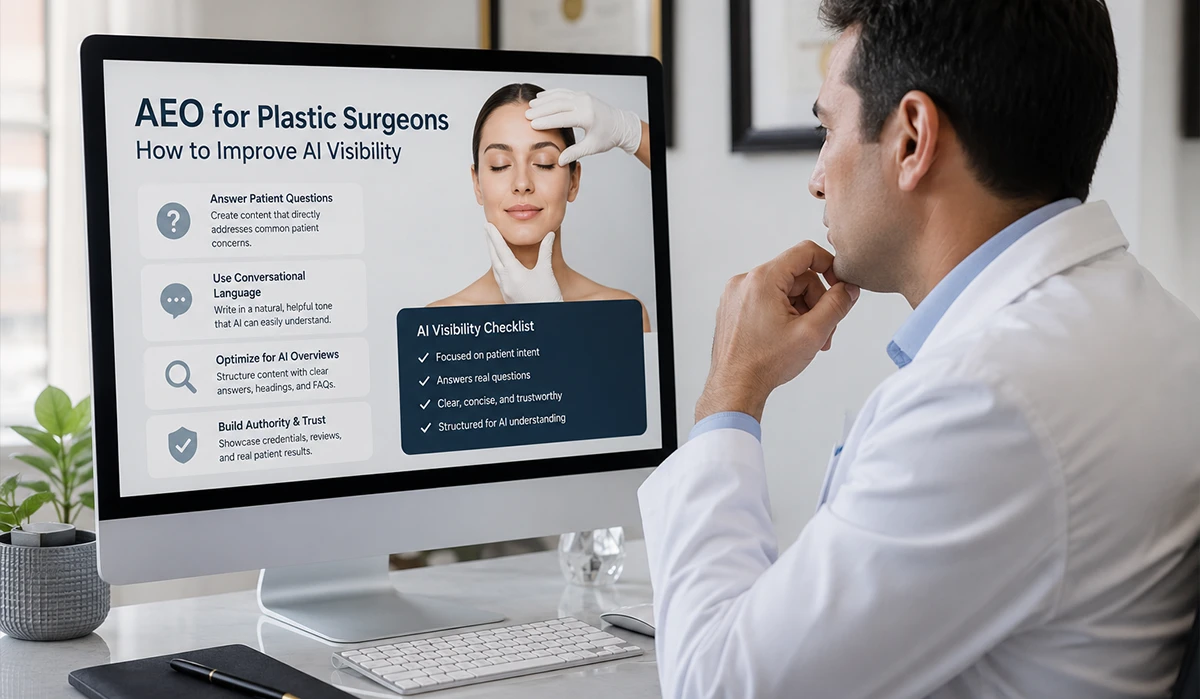
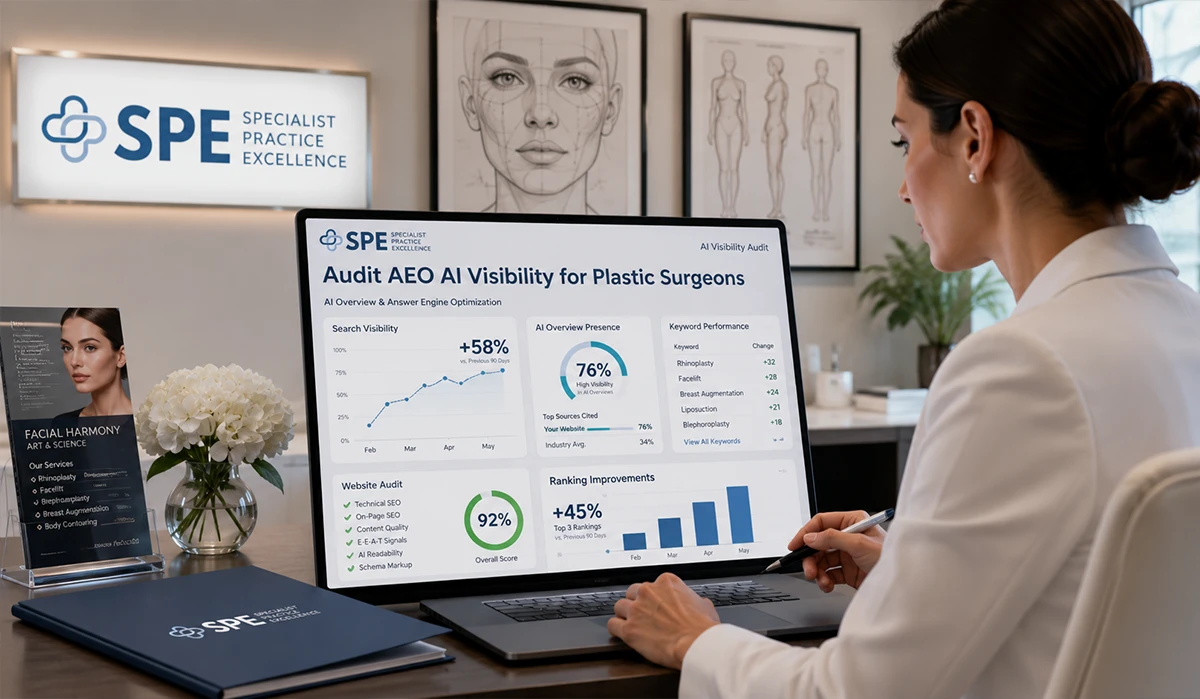
- AI Search visibility (AEO, GEO etc)
- Surgeon-led thought leadership – Authentic voice content
- Long-form authority content
- Educational content
- More transparency around options, recovery and risk
This article itself is an example of the type of content that performs in 2026.
Technology and AI in Practice

AI is not replacing surgeons, but it is improving marketing & business operations.
Key areas include:
- Consult documentation
- CRM automation
- Patient communication
- Imaging and planning support
Practices using AI effectively will gain:
- Efficiency
- Consistency
- Scalability
The Death of the Procedure Page
Traditional marketing is becoming ineffective.
Patients now think in:
- Problems
- Life stages
- Outcomes
Not procedures.
Traditional websites are structured around procedures:
- Facelift page
- Rhinoplasty page
- Liposuction page
Patients are searching for:
- Facial ageing after weight loss
- Tired eyes
- Loose skin after weight loss
Practices that restructure their marketing around conditions and pathways will outperform competitors.
Strategic takeaway:
Shift websites to:
- Pathways
- Conditions
- Patient types
This is a core content focus area for Specialist Practice Excellence.
The Modern Consultation Model

The consultation is now the most important commercial moment.
High-performing consults are:
- Structured
- Strategic
- Planning-based
They include:
- Staged recommendations
- Clear limitations
- Long-term planning
This leads to:
- Higher conversion
- Higher case value
- Better outcomes
The Economics of Plastic Surgery in 2026
Rising Costs
- O.R. / Operating theatre costs increasing (Limited availability in Australia)
- Staffing challenges
- Equipment costs rising
Medical Finance
Patients expect:
- Payment plans
- Flexible options
Medical Tourism Pressure
Patients compare globally.
Practices must emphasise:
- Safety
- Expertise
- Continuity of care
The Changing Role of Medical Tourism
Trends:
- Patients still travel for lower prices
But: - More awareness of complications
- More demand for revision surgery locally
Opportunity for USA/UK/Australian Surgeons:
Position as:
- “Safe local alternative”
- “Correction expert”
Key Metrics to Track in 2026
Metrics That Matter Now
- Consult-to-surgery conversion rate
- Average case value
- Multi-procedure rate
- Time-to-surgery
- Revision rate
- Lifetime patient value
This shifts mindset from:
- Marketing → business performance
Market Differences: USA, UK, Australia
USA
- Fast adoption of innovation
- Highly competitive
- Strong demand for niche procedures
UK
- Growth in facial surgery
- Cost sensitivity
- Natural outcomes trend
Australia
- Strong regulatory environment
- Demand for breast revision and body surgery
- Increased scrutiny on advertising
Opportunities for Growth in 2026
The biggest opportunities include:
- Post-weight-loss transformation pathways
- Revision and corrective surgery
- Integrated treatment systems
- Male market expansion
- Natural restoration positioning (not in Australia)
Future Watchlist
Looking beyond 2026:
- Cadaver fat technologies (Alloclae, Renuva etc)
- Advanced regenerative treatments
- Oral GLP-1 expansion
- New skin-tightening innovations like Attiva
- Stem Cell treatments
These are emerging, not yet standard.
FAQs about Plastic Surgery Trends & Opportunities
Many clinics are generating leads but not converting them into high-value cases. The issue is usually not demand, but how patients are qualified, educated, and guided through the decision process. Practices that shift focus from lead volume to patient quality and structured conversion see significantly stronger revenue growth.
Rising costs and longer decision cycles mean that volume alone is no longer a sustainable strategy. Increasing case value through multi-procedure planning and better patient selection improves profitability without increasing workload. This is now a core focus for high-performing practices.
These patients often require multiple procedures across face, body, and breast, creating higher lifetime value. They are also highly motivated to complete their transformation journey once they begin. Practices that build dedicated pathways for this group are capturing a disproportionate share of revenue growth.
The consultation is where most revenue is won or lost. A structured, planning-based consult increases trust, improves clarity, and leads to higher-value treatment plans. Practices that refine this process consistently outperform those relying on informal or transactional consults.
Patients are becoming more cautious about over-treatment, filler migration/damage and are seeking longer-lasting solutions. This is reducing reliance on high-frequency injectable visits as a primary revenue driver. Clinics that re-position toward structural and surgical solutions are better aligned with current demand.
Patients are increasingly sceptical of generic content and promotional messaging. They are looking for expertise, clarity, and guidance from trusted professionals. Practices that invest in thought leadership and educational content attract higher-quality patients and convert more effectively.
These patients have already experienced suboptimal outcomes and are highly motivated to find a trusted solution. While they require more time and care, they tend to convert at higher rates once trust is established. This segment also supports strong referral and reputation growth.
Price-sensitive patients are often lower value and more difficult to manage. Competing on price reduces margins and can negatively impact brand positioning. Practices that focus on expertise and outcomes attract patients willing to invest in quality.
While patients take more time to decide, they are more committed once they proceed. This leads to fewer cancellations and higher-value treatment plans. Practices that implement effective nurturing systems benefit from this shift.
Well-informed patients are easier to convert and more confident in their decisions. Educational content builds trust before the consultation even begins. This reduces friction and improves overall conversion rates.
Patients increasingly understand that better outcomes require a combination of treatments. Surgeons are also more comfortable recommending integrated plans. This naturally increases case value and improves aesthetic results.
Different patient groups have different needs, expectations, and decision drivers. Segmenting services allows for more targeted marketing and better patient alignment. This improves both acquisition and conversion efficiency.
Many practices have not adapted their messaging or service design to suit male patients. When approached correctly, this segment offers strong growth potential with less competition. It also tends to have higher discretionary spending. See www.maleplasticsurgery.com as an example.
Despite the opinions of wealthy doctors and the medical industry, patients want to use finance for cosmetic surgery. Patients increasingly expect flexible payment options for higher-value procedures. Offering structured finance solutions reduces barriers to commitment. This can significantly improve conversion rates and case acceptance.
The patient journey does not begin or end with surgery. Enhancing prehab and recovery improves outcomes and patient satisfaction. It also creates additional revenue streams and differentiation.
Being seen is no longer enough in a crowded market. Patients are choosing providers based on perceived expertise and trust. Strong positioning allows practices to stand out without relying on volume-based marketing.
These practices focus on clarity, messaging, and patient alignment rather than just traffic. By refining their positioning and content, they attract patients who are more likely to proceed. This improves efficiency and profitability.
The SPE Approach to Practice Growth
At Specialist Practice Excellence, we focus on aligning practices with these trends through:
- High-value patient acquisition and premium pricing models
- Consultation and conversion systems
- Authority-driven content strategies
- Pathway-based website design
- Long-term growth planning and succession strategies
David Staughton explains:
“Our role is not just to generate leads. It’s to help practices build a system that attracts the right patients, converts them effectively, and maximises long-term value.”
Taking Action and Implementing
To succeed in 2026:
- Move from procedures to pathways
- Focus on patient quality, not volume
- Improve consultation structure
- Integrate services
- Build authority
The future of plastic surgery belongs to practices that are:
- Strategic
- Selective
- Structured
And above all, aligned with how patients now think and decide.