
Table of Contents
- Supporting Plastic Surgery Patient Mobility and Recovery – Why Early Movement Matters
- Risks of Immobility After Surgery
- The Nurse’s Role in Encouraging Mobility
- Common Patient Concerns and How to Address Them
- Red Flags During Mobilisation
- Do’s and Don’ts of Supporting Patient Mobility
- Taking Action and Implementing
- Further Reading
Supporting Plastic Surgery Patient Mobility and Recovery – Why Early Movement Matters
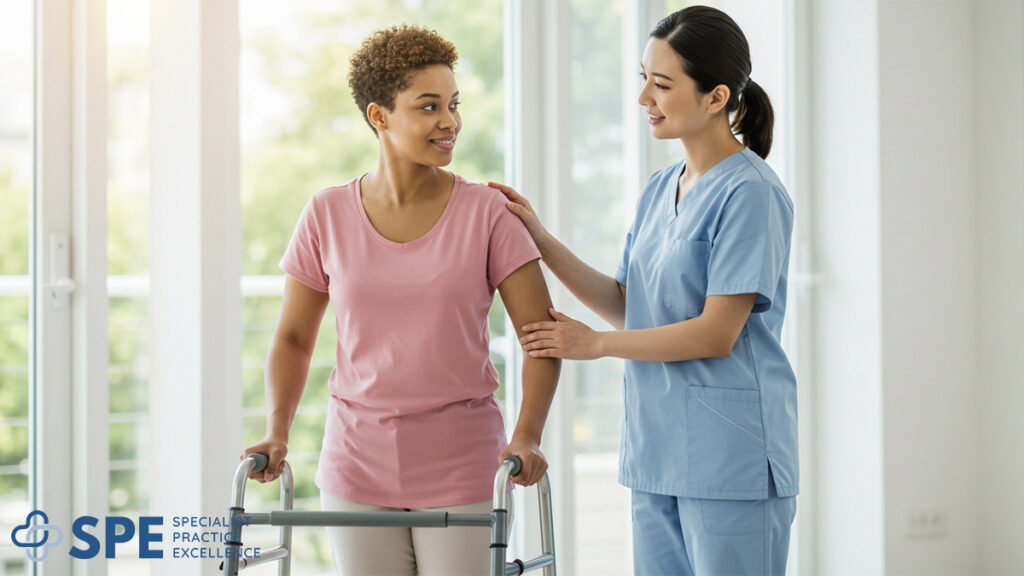
Early mobilisation after plastic and cosmetic surgery is one of the simplest yet most powerful interventions nurses can use to improve outcomes. Patients who move sooner recover faster, experience fewer complications, and often feel more confident about their progress. Yet, many patients fear that moving will harm their incisions or undo the surgeon’s work. Nurses in private practice play a crucial role in balancing safety with encouragement, guiding patients through those first steps toward recovery.
This article explores why mobility matters, the risks of immobility, practical strategies for encouraging safe movement, and the nurse’s vital role in ensuring plastic surgery patients recover well.
Why Early Movement Matters in Plastic Surgery
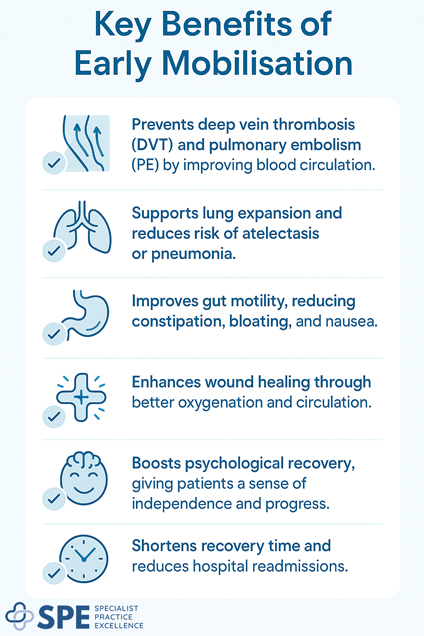
Key Benefits of Early Mobilisation
- Prevents deep vein thrombosis (DVT) and pulmonary embolism (PE) by improving blood circulation.
- Supports lung expansion and reduces risk of atelectasis or pneumonia.
- Improves gut motility, reducing constipation, bloating, and nausea.
- Enhances wound healing through better oxygenation and circulation.
- Boosts psychological recovery, giving patients a sense of independence and progress.
- Shortens recovery time and reduces hospital readmissions.
In cosmetic surgery, where aesthetics and patient satisfaction are highly valued, these benefits also contribute to smoother, safer, and more positive experiences.
Risks of Immobility After Surgery
Without timely mobilisation, patients may face:
- DVT and PE – life-threatening complications, particularly after abdominoplasty or combined procedures.
- Respiratory issues – shallow breathing and retained secretions increase infection risk.
- Delayed bowel recovery – constipation and ileus are common with opioid use and inactivity.
- Increased pain and stiffness – immobility worsens discomfort, making later movement harder.
- Psychological decline – patients who remain passive often feel helpless or discouraged.
The Nurse’s Role in Encouraging Mobility
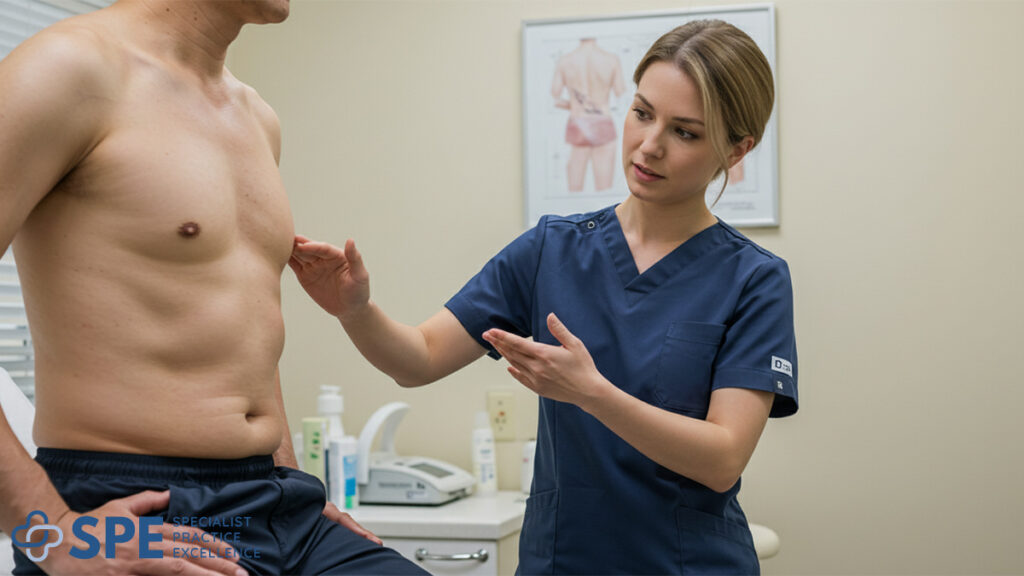
Patients often need reassurance that movement is safe and beneficial. Nurses should:
- Explain why early movement is important in simple terms.
- Demonstrate safe ways to sit, stand, and walk without straining incisions.
- Monitor for dizziness, pain, or instability.
- Encourage gradual progression — from deep breathing and ankle pumps to walking short distances.
- Document progress and share observations with the surgeon.
Practical Strategies for Early Mobilisation
Stepwise Mobilisation Plan
- First hours post-op – ankle pumps, leg exercises, deep breathing in bed.
- Day 1 – sitting upright, dangling legs, assisted short walks.
- Day 2 onwards – independent walking, posture coaching, increasing distance.
Patient Education Tips
- Reassure that movement will not “undo stitches.”
- Use visual aids or demonstrations when possible.
- Encourage wearing compression garments correctly during mobilisation.
- Instruct patients to ask for help when feeling dizzy or unsteady.
Common Patient Concerns and How to Address Them
- “I’m scared I’ll rip my stitches.”
Explain that controlled movement supports healing and is unlikely to damage incisions. - “I feel too dizzy to walk.”
Assess hydration, pain management, and vitals; start with sitting exercises until stable. - “I don’t want to be in pain.”
Acknowledge discomfort, but explain that immobility increases stiffness and makes pain worse over time.
Red Flags During Mobilisation
Escalate or pause activity if:
- Patient experiences chest pain or shortness of breath.
- Oxygen saturation drops significantly.
- Severe wound pain or bleeding occurs.
- Patient becomes faint or collapses.
- Signs of DVT appear (calf pain, swelling, redness).
Do’s and Don’ts of Supporting Patient Mobility
Do’s
- Do explain the benefits of early movement in clear, reassuring terms.
- Do assess patient readiness before each mobilisation attempt.
- Do start with small, achievable steps and build gradually.
- Do monitor for dizziness, pain, or complications while mobilising.
- Do encourage hydration and nutrition to support energy.
- Do celebrate small milestones to boost patient confidence.
- Do document progress clearly to inform the whole team.
Don’ts
- Don’t pressure patients to move beyond their safe limits.
- Don’t ignore signs of DVT, PE, or fainting during mobilisation.
- Don’t dismiss patient fears — address them directly with reassurance.
- Don’t allow garments or dressings to restrict safe movement.
- Don’t delay pain relief before encouraging mobilisation.
- Don’t assume all procedures have the same mobility timeline — tailor care.
- Don’t neglect patient education on safe at-home mobility after discharge.
FAQs on Supporting Mobility and Recovery
Clinical Practice FAQs
Q: How soon should patients mobilise after plastic surgery?
Ideally within hours, starting with leg exercises in bed and progressing to short walks within the first day.
Q: Which surgeries require the most careful mobilisation?
Abdominoplasty, body lifts, and combined procedures require extra support due to incision strain and DVT risk.
Q: Can patients harm their surgical results by moving too soon?
No, controlled early movement supports healing. Overexertion, however, can strain incisions, so gradual progression is key.
Pain and Comfort FAQs
Q: How can nurses manage pain to make mobilisation easier?
Pre-medicate before movement, support incisions with pillows or garments, and encourage small steps first.
Q: Why do some patients feel more pain after walking?
Muscles may stiffen during rest, and gentle stretching through walking can temporarily increase discomfort — but this usually improves with continued movement.
Q: Should compression garments be worn during mobilisation?
Yes, garments provide support and reduce swelling, but must be fitted correctly to avoid restricting circulation.
Safety and Monitoring FAQs
Q: What should nurses check before mobilising a patient?
Vital signs, pain level, garment fit, and patient alertness. Ensure assistance is available for unsteady patients.
Q: When should mobilisation be stopped immediately?
If the patient develops chest pain, shortness of breath, fainting, or wound bleeding, stop and escalate.
Q: How do you reduce dizziness when helping a patient stand?
Encourage slow transitions — from lying to sitting, then standing — and monitor blood pressure for postural drops.
Patient Education FAQs
Q: What simple exercises can patients do in bed if they can’t walk yet?
Ankle pumps, knee bends, and deep breathing exercises help circulation and lung function.
Q: How can nurses reassure patients afraid of moving?
Explain benefits, demonstrate safe techniques, and remind them movement prevents complications rather than causes them.
Q: What advice should be given for mobility at home?
Encourage regular short walks, hydration, and avoiding prolonged sitting or lying down. Provide written instructions.
Taking Action and Implementing
Supporting early mobility in plastic surgery recovery is one of the most effective ways nurses can reduce complications, improve patient outcomes, and enhance satisfaction. With careful assessment, encouragement, and education, nurses help patients regain independence and confidence from the very first steps after surgery.
In Specialist Practice Excellence, mobility is not just a clinical task — it is a cornerstone of holistic recovery. By guiding patients through safe, supported movement, nurses empower them to heal faster, feel stronger, and enjoy the full benefits of their surgical journey.